Data Centers Boom: Real Community Concerns Demand Responsible Solutions

Across America, and right here in California, hyperscale data centers — the massive facilities powering the explosive growth of artificial intelligence, cloud computing, and digital infrastructure — are proliferating at breakneck speed. Tech giants are racing to build them, promising economic benefits and technological dominance. But local communities, already grappling with high energy costs, water scarcity, and strained infrastructure, are raising legitimate alarms. These concerns are not baseless NIMBYism (Not in My Back Yard); they reflect real pressures on our power grid, water resources, and quality of life.
Aerial view of a large hyperscale data center complex

The Core Concerns: Power, Grid Reliability, and Water Usage
The numbers are staggering. U.S. data centers consumed about 176 terawatt-hours (TWh) of electricity in 2023, roughly 4.4% of national usage. Projections show this could surge to 325–580 TWh by 2028 — potentially accounting for 6.7%-12% of total U.S. electricity. A single large AI-focused facility can demand as much power as tens of thousands of homes. In California, data center electricity use nearly doubled between 2019 and 2023, contributing to grid strain in a state already prone to reliability issues.
This rapid load growth forces utilities to scramble for new generation and transmission capacity, often leading to higher rates for all customers, project delays, and risks to grid stability. In some regions, data centers are already prompting emergency measures and reliance on fossil fuel backups.
Water is the other major flashpoint. Traditional evaporative cooling systems can consume millions of gallons of water per facility per day. In drought-prone California, where data centers already doubled on-site water use from 2019 to 2023, this raises serious questions about competing with agriculture, households, and ecosystems.
Noise from cooling fans, land conversion, traffic, and the uneven distribution of jobs versus costs add to local frustrations. Communities feel the impacts immediately while broader economic gains often flow elsewhere.
These Problems Are Manageable — With the Right Technology
The good news? Many of these challenges are addressable through proven and emerging engineering solutions. The industry itself is innovating, but voluntary adoption is uneven and often insufficient where growth is fastest.
For power and grid concerns, data center operators can and should co-locate or develop dedicated generation capacity — whether natural gas plants for quick reliability, renewables paired with storage, nuclear restarts, or other firm sources. Behind-the-meter power reduces strain on the public grid and prevents ratepayers from subsidizing massive new loads. This is not a new problem; in the early 20th century, miners, lumber mills, and other large project owners typically had to build and supply their own power. Much of this still exists in the lumber industry, where they still often must build power cogeneration plants.
For cooling and water usage, advanced designs make a dramatic difference:
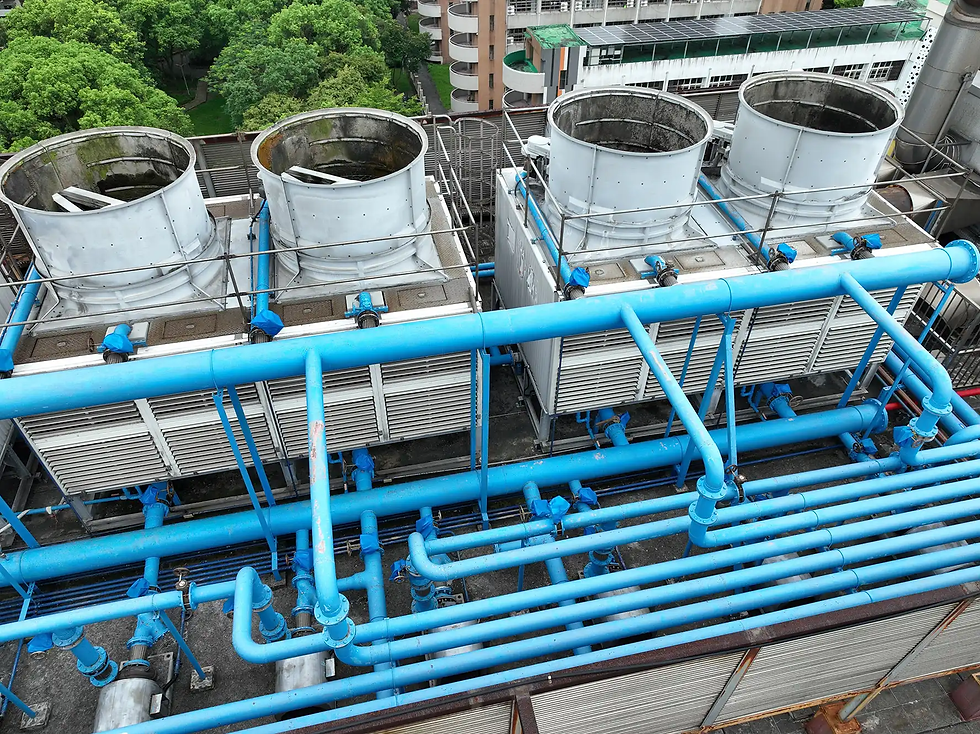
Closed-loop systems: Water (or coolant) circulates in sealed pipes and heat exchangers, rejecting heat through dry coolers or other methods with minimal evaporation or loss. These can cut water consumption by 70–95% or more compared to traditional towers. Microsoft and others have deployed designs achieving near-zero water use for cooling in key regions.
Closed-loop liquid cooling diagram and implementation

Geothermal/ground-source "radiators": Networks of underground boreholes or loops use the Earth's stable temperatures as a heat sink. This provides efficient, low-water cooling and works well when sites are chosen with suitable geology.

These technologies exist and are being implemented in some forward-looking projects. They work best when incorporated from the design stage.
Watch: Data Center Cooling Methods Explained (Air, Liquid & Immersion) YouTube Video – Excellent technical overview
Watch: Liquid Cooling Technology in Data Centers (AI-focused) YouTube Video – Direct-to-chip explanation
Mandates Are Needed: Make Operators Bear the Full Cost
Solutions like dedicated power generation and water-efficient closed-loop or geothermal cooling add considerable expense to upfront construction and operational costs. As economist Robert Heinlein famously illustrated with the principle TANSTAAFL — "There Ain't No Such Thing As A Free Lunch" — these costs cannot magically disappear. Mandating that data center operators internalize them ensures the expenses are not quietly passed on to all electricity ratepayers and taxpayers. Instead, they would primarily be borne by the companies and the heavy users of AI services, cloud computing, and data-intensive applications who benefit most from the facilities.
Regulatory mandates should also establish reasonable timelines for operators to retrofit existing data centers to meet the same standards or to develop additional offsetting capacity elsewhere that neutralizes the ongoing consumption and impacts of legacy facilities.
These mandates would achieve several critical goals:
Protect the grid and keep electricity affordable for residents and small businesses.
Safeguard local water supplies, especially vital in California.
Ensure environmental responsibility aligns with the massive profits from AI.
Because these mandates may require larger footprints for data centers, it will direct their construction away from dense urban centers.
Act as a natural economic governor on unchecked, speculative expansion. Not every proposed project will pencil out under responsible rules — and that’s a feature, not a bug.
A Balanced Path Forward for Shasta County and Beyond
Shasta County and Northern California are not immune to these trends. Given our region’s energy challenges, the Sacramento River watershed's water resources, and our focus on responsible growth, we must learn from struggles elsewhere (such as Northern Virginia or parts of Silicon Valley) and get ahead of the curve.
Data centers bring potential tax revenue, construction jobs, and support for technological progress. But prosperity cannot come at the expense of reliable power, clean water, and livable communities. Smart mandates will encourage better siting, better engineering, and better outcomes — while applying the timeless TANSTAAFL principle so that those who drive and profit from the AI boom pay their fair share and the expense is not solely borne by taxpayers.
Shasta County could be an attractive location for new data centers built under these mandates. We are a rural setting with available land and natural topography and geology that is well suited to meet the demands of the proposed technology mandates.
Local leaders, state legislators, and federal policymakers should act decisively. Require transparency in planning, full cost allocation to operators, proven mitigation technologies, and clear retrofit timelines. Only then can we harness the benefits of the AI boom without sacrificing what makes places like Shasta County worth living in.
Shasta Unfiltered will continue monitoring data center proposals and energy policy in our region. Share your thoughts and local insights in the comments below.
Recommended Video for Readers (Grid Impact Focus):
Sources
Lawrence Berkeley National Laboratory / U.S. Department of Energy: Data center electricity consumption (176 TWh in 2023, projected 325–580 TWh by 2028). https://newscenter.lbl.gov/2025/01/15/berkeley-lab-report-evaluates-increase-in-electricity-demand-from-data-centers/ https://www.belfercenter.org/research-analysis/ai-data-centers-us-electric-grid
Next 10 Report: California data center water use (doubled 2019–2023). https://www.next10.org/publications/ai-environmental-public-health-impacts
Microsoft and Oracle: Closed-loop / zero-water cooling implementations. https://www.microsoft.com/en-us/microsoft-cloud/blog/2024/12/09/sustainable-by-design-next-generation-datacenters-consume-zero-water-for-cooling/ https://www.oracle.com/news/announcement/blog/closed-loop-cooling-in-oracle-ai-data-centers-2026-02-09/
Rhodium Group & others: Geothermal cooling potential for data centers. https://rhg.com/research/geothermal-data-center-electricity-demand/ https://www.energy.gov/hgeo/geothermal/geothermal-and-data-centers
Congressional Research Service & state proposals: Power addition and cost allocation discussions. https://www.congress.gov/crs-product/R48646