Board Adopts Shasta County Fire Department Master Plan

REDDING, Calif. — The Shasta County Board of Supervisors opened its October 13, 2026 meeting by adopting a resolution recognizing Ashleigh Roller, Investigative Technician II with the Sheriff’s Office, as the county’s Employee of the Month for October. The board also adopted a proclamation designating October 2026 as Breast Cancer Awareness Month in Shasta County, sponsored by Board Chair Chris Kelstrom.


Supervisors later adopted proclamations recognizing Red Ribbon Week (October 23–31, 2026) for countywide substance-abuse prevention activities—including school outreach expected to reach more than 3,000 students, red-bridge lighting, and an October 24 drug take-back event at City Hall—and National 4-H Week (October 4–10, 2026). During the meeting, 4-H club leaders presented on the organization’s work as the largest youth development program in the United States. Members learn the importance of healthy living along with practical life skills through hands-on projects. The local program reported serving 620 members, completing more than 170 projects, and relying on 118 adult volunteers.

Fire Department Master Plan
Cal Fire Chief Sean O’Hara and consultant Stephen Hall of AP Triton presented an 18-month long-range master plan and community risk assessment. The study found that 61.6 percent to 66 percent of calls are medical, driven in part by an aging population in which 22 percent of residents are age 65 or older. Eighty percent of the response area is State Responsibility Area with rising wildfire risk. Challenges include volunteer recruitment and retention, aging apparatus (many more than 25 years old), and dispatch times that exceed NFPA 1225 benchmarks. Outlying volunteer stations have low call volumes and longer response times tied to availability, while career station unit-hour utilization sits around 5 percent against a 10 percent benchmark. Chief O'Hara requested that people interested in volunteering should call (530) 225-2418. Volunteers need to be able to lift 100 lbs. Supervisor Corkey Harmon objected to the requirement, saying it could exclude some very experienced people who could not lift that weight but could rely on others to do the lifting. He gave an example of a nurse who is also an EMT that has 40 years of experience, but she can't pick up 100 lbs.

Recommendations included short-term steps such as improving dispatch efficiency, pursuing automatic aid with the City of Redding, clarifying volunteer leadership roles under Cal Fire, formalizing technical rescue coordination with the Sheriff’s Office, and separating capital and grant funds. Mid-term items called for adding a training captain, implementing rescue-awareness training and target-hazard pre-plans, strengthening EMS oversight, and exploring multi-year Cal Fire contracting. Long-term suggestions focused on refining EMS dispatch protocols, expanding public information, and developing phased capital and facility replacement plans. Discussion noted potential financial pressures approaching insolvency risks by around 2028 without structural changes. Trends toward regional consolidation or expanded Cal Fire contracting were also reviewed, with one example citing possible annual savings of roughly $1.8 million from consolidating administrative, fleet, and leadership functions.
Supervisor Kevin Crye warned that the county’s fire services are “freight training towards a cliff financially.” He told Fire Chief Sean O’Hara and the board that “there is a cliff coming and if we do not figure out how to fix that cliff, you guys will have your own fire department back and will not be having us run your fire department.” Shasta County has contracted with CAL FIRE for roughly 46 years to staff and administer county fire protection, and both Crye and O’Hara stressed that the current arrangement is becoming unsustainable without a long-term funding solution.
The “cliff” refers to a projected shortfall in covering the county’s annual CAL FIRE contract, currently about $11.3 million to $11.38 million. Nearly 40 percent of that cost has recently been covered by one-time funding sources, and officials say remaining fund balances may not be enough to sustain the full contract by the end of fiscal year 2028-29 or 2029-30, depending on revenues. The contract has more than doubled since fiscal year 2015-16, driven largely by statewide CAL FIRE personnel cost increases, including changes tied to the shift to a 66-hour workweek. If the county can no longer afford the agreement, CAL FIRE would hand the department back, forcing Shasta to establish its own leadership and administrative structure—a transition estimated to take about a year—or consider service reductions such as station closures or heavier reliance on volunteers. The board approved the long-range plan while emphasizing the need to identify ongoing local funding or other solutions before that point is reached.
The board adopted the plan unanimously (5–0). A motion directing the CEO, Chief O’Hara, and a board member to meet with the City of Redding on collaboration, consolidation, or automatic aid failed 3–2. A separate motion directing Chief O’Hara to provide recommendations on potential station consolidations or closures before budget hearings passed 4–1. Any station-closure proposals will return formally to the board. A motion to establish performance-metrics tracking failed for lack of a second. Informal communications with Redding continue, and any formal agreements remain a board decision.
Clinic Loan Amendment
The board addressed a 2007 Community Development Block Grant loan of $300,000 originally made to Hill Country Community Clinic in Round Mountain. The note had been intended as a 15-year forgivable instrument, but documentation gaps discovered in 2022 delayed action. Program rules permit forgiveness; if repaid, the funds would become restricted program income for housing uses. Hill Country serves roughly 6,700 patients (as of 2025) across seven sites, providing medical, dental, behavioral health, youth, and workforce services, with rising numbers of seniors, unsheltered patients, and substance-use treatment clients.

After discussion of immediate full forgiveness versus a staged approach, a motion by Supervisor Harmon for full remaining forgiveness failed for lack of a second. The board then approved structured forgiveness of $100,000 per year over three years (through 2029) on a 4–1 vote (Long, Harmon, Kelstrom, and Plummer in favor; Crye opposed). Supervisors cited continued service-delivery accountability, no new treasury impact, and assistance to the clinic’s financial reporting and donor engagement.
Environmental Health Fees
Environmental Health staff clarified that pre-plan consultations carry no fee, while standard fees apply to formal plan checks and annual permits, consistent with the California Retail Food Code. Online resources now include the code, fee schedules, guidance, checklists, and a permit flow chart. Staff coordinates with city building, fire, and wastewater departments. Public comments raised concerns about fee burdens and suggested deferring plan-check fees; staff noted that neighboring counties also charge standard fees while offering free pre-review guidance. The board left the current fee structure unchanged. Staff also described assisting a downtown chocolate shop that had triggered full facility requirements by selling unpackaged items without a permit, emphasizing prioritized help for local startups. During public comment on this item, Leslie Sawyer, representing the Shasta County Chamber of Commerce's Restaurant Coalition, said she was pleased to hear that Shasta County has no additional requirements for restaurants and food trucks beyond what the state requires. Shasta Unfiltered contacted Sawyer after the meeting to inquire about the new restaurant coalition. She said it launched recently to help restaurants deal with all levels of government and streamline the process after complaints, questions, and concerns were voiced to the chamber. Within two months of contacting the county, Sawyer said Sean Ewing, Director of Resource Management, and his team have done a great job implementing changes to the county's website, making needed information more accessible, and presenting at the board meeting.
Other Actions and Reports
Health and Human Services Agency Employment and Eligibility Services reopened at 2600 Park Marina Drive, consolidating with Child Support Services. The move is projected to save about $200,000 this year and $400,000 annually. Full services are expected by mid-October, with EBT card printing by mid-November.
Supervisor Plummer reported on Front Porch Shasta (social connection and suicide-prevention work focused on seniors, including data exchange with hospitals to reduce veteran suicides) and a First 5 town hall on positive childhood experiences scheduled for Thursday, October 15, from 6 - 8 p.m. at the Cascade Theater. He also noted he has been working with the Economic Development Corporation to focus development efforts on specific industries such as healthcare and timber/wood products that would be a good fit for our area.
The board approved scheduling a December 2026 presentation on the Real Estate Fraud Investigation Program, which runs a roughly $154,000 deficit (costs $186,000 against $32,000 in revenue) and carries a 1,000-case backlog in the District Attorney's Office; options include repealing the ordinance or raising fees or the expanding the documents it applies to.
Supervisors unanimously invited Tehama County Supervisor Greg Jones to present on October 27 about a mobile-home rent-stabilization ordinance framework (for example, 5 percent plus CPI).
Supervisor Kevin Crye made a motion to bring back an agenda item to extend County Counsel Joseph Larmour’s contract for a new four-year term. The proposed extension had appeared on the September 29 Board of Supervisors agenda, where the board deadlocked 2-2 after Crye recused himself. In urging the item’s return, Crye noted that Larmour has saved the county money by reducing the use of outside attorneys and that several department heads, including the Sheriff, had asked him to bring the matter back. The board voted 3-2 to return the item to a future agenda.
An amendment streamlining approval of pre-service training expenses for supervisor-elects under existing CEO and Clerk policies was introduced and will return for adoption. The board also placed the bipartisan American Affordability and Jobs Act of 2026 on a future agenda for informational discussion and potential direction.
Public Comment
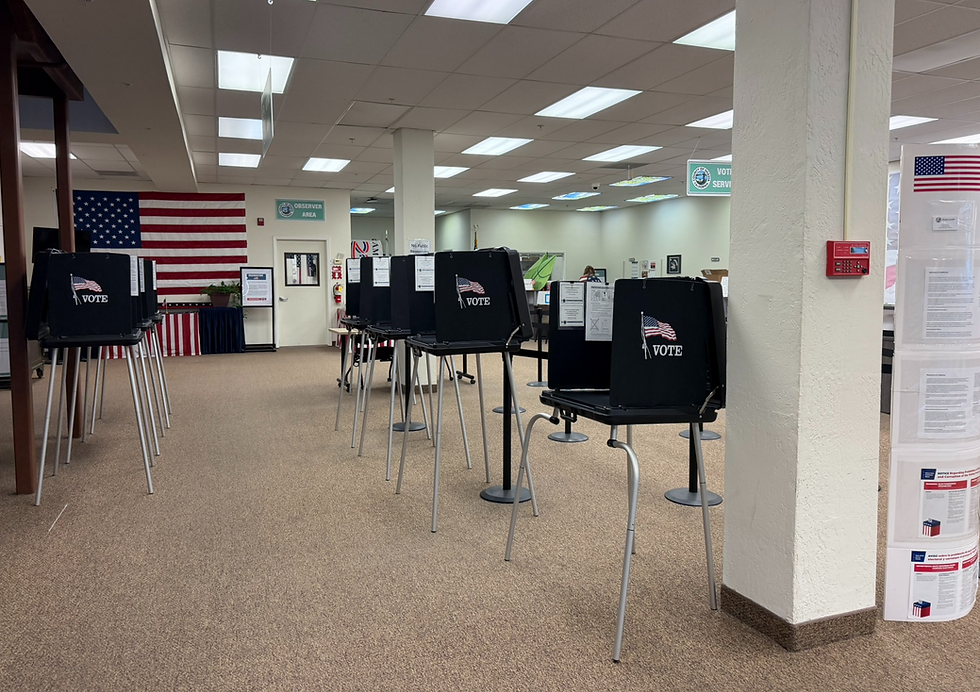
Multiple speakers raised concerns about election records, alleging destruction of 2024 materials and incomplete responses to Public Records Act Request No. 26-1766 seeking December 3, 2024, Election Office records; the matter is in litigation (Chilson v. County of Shasta). Comments also addressed facility issues and staffing shortages at the Market Street elections office.
Alleged verbal threats involving firearm references among an attendee and calls for chamber security enforcement, a petition with roughly 2,200 signatures seeking agenda consideration of data-center regulation, and urgent interagency action on the Henderson Ditch before winter. Speakers on the ditch cited 1963 records of county responsibility, last year’s flooding damages estimated at about $700,000 across seven homes, and potential use of emergency funds through Cal OES or the California Conservation Corps. Board members acknowledged the ditch issue, jurisdiction complexities, and intent to coordinate site visits with the City of Redding and Caltrans.
The consent agenda passed unanimously (5–0) with no items pulled. There were no reportable actions by the board after they met in closed session.
The full video for the meeting can be viewed at the Shasta County website: