
Redding City Clerk Race Left Off Ballot, Echoing 2022 Shasta Lake Omission Under Prior Registrar

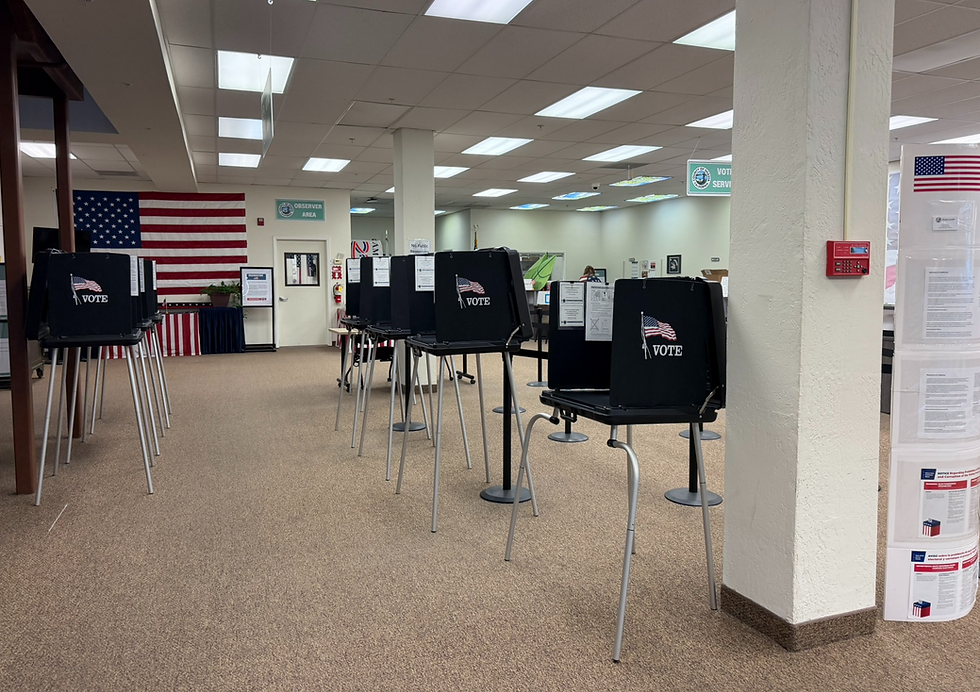
SHASTA COUNTY, CA — Shasta County voters opening their November 3 general election ballots have discovered that the uncontested race for Redding City Clerk is missing, despite state law requiring it to appear. The omission, which Registrar of Voters Clint Curtis has attributed to a misunderstanding of election code, is prompting city officials to prepare for a special election that could cost taxpayers $200,000 to $300,000.
Incumbent Sharlene Tipton, who was appointed to the post and is running unopposed for a four-year term, appears on the county’s final qualified candidate list but the City Clerk position is missing from the ballot. The City of Redding confirmed the race was supposed to be included, as another citywide contest—the Redding City Council race—is already on the ballot.
Under California Elections Code section 10229, cities may generally appoint an uncontested candidate and cancel the election to save costs. Subsection (b) creates an exception: if more than one person has been nominated for another citywide office, or if a city measure is on the ballot, the uncontested race must still appear. Curtis acknowledged the error in a statement, saying, “We missed it.” He explained that unopposed races are normally left off so the governing body can appoint the sole candidate, but that he was unaware of the specific exception for city races when another city contest is already present.
Redding Mayor Mike Littau said city officials, after consulting with the city attorney and county counsel, are “pretty confident” a special election will be required. Tipton is expected to remain in office in the interim. Shasta County Supervisor Matt Plummer has suggested the county should bear the cost, given that the error originated in the elections office.
The situation closely mirrors an error under former Registrar of Voters Cathy Darling Allen in 2022. That year, a two-year vacancy on the Shasta Lake City Council—created after the death of Councilmember Larry Farr, the appointment of Matt Doyle, and Doyle’s subsequent move out of the city—was omitted from the November ballot. Voters were instructed only to choose two candidates for four-year seats, even though city officials and candidates understood three openings existed.
Darling Allen publicly took full responsibility at a Shasta Lake City Council meeting, stating, “My office absolutely has culpability here. We made an error, for sure. We did not include that separate contest that was two years.” She supported the county sharing costs for the remedy. The Shasta Lake City Council subsequently called a special election for March 7, 2023, which Tena Eisenbeisz won.
In both cases, the county elections office failed to place a required city contest on the general election ballot, resulting in the need for a separate, more expensive special election. The 2022 incident involved a short-term vacancy that state law required to be filled by election rather than appointment once the November election was underway. The current case involves a standing uncontested city office that the Elections Code mandates appear when other city races are already on the ballot.
The pattern of ballot and filing errors in the Shasta County Elections Office extends beyond the two omissions. During the March 5, 2024 primary, while Joanna Francescut was serving as acting Registrar of Voters during Cathy Darling Allen’s medical leave, the office used the wrong randomized alphabet to order candidate names on local races. State law requires most local contests, including Board of Supervisors races, to follow the California Secretary of State’s random alphabet draw rather than a locally conducted one. In the District 2 Supervisor race, Allen Long’s name appeared first and Laura Hobbs’s appeared third; under the correct state draw, the order would have been reversed. Long received 50.13 percent of the vote—clearing the majority threshold needed to avoid a November runoff by only 14 votes. Research on California local elections has repeatedly shown that first position on the ballot confers a statistically significant advantage, often estimated at 2 to 5 percentage points in multi-candidate nonpartisan races.
Francescut later acknowledged the error in court testimony, attributing it to inadequate staff training and a failure to catch the problem during ballot proofing. A lawsuit challenging the District 2 result was dismissed for lack of proof that the mistake altered the outcome, but the narrow margin left open the possibility that correct ordering could have forced a runoff. Separately, voters’ approval of Measure D in the same March 2024 election—intended to convert Shasta County to a charter county effective January 1, 2025—did not take effect on schedule because the required certification documents under Government Code section 23713 were never filed with the Secretary of State until August 2025. Francescut stated she never received a certified copy from the Board of Supervisors to submit; Board Chair Kevin Crye and others pointed to the Elections Office. The documents were ultimately filed under Clint Curtis after County Counsel discovered the omission.
Curtis, who was appointed by the Board of Supervisors in 2025 after Darling Allen’s retirement and a subsequent short-term appointment of Tom Toller, has faced ongoing scrutiny over his administration of elections even though citizen observers say that he has greatly increased transparency and chain-of-custody of the ballot processing.
Another recent controversy involves ballots from the June 2, 2026 primary that Curtis himself certified and then later locked away. After losing that election to Joanna Francescut, Curtis and roughly a dozen election workers claimed some ballots looked, felt, or smelled irregular. He padlocked a second-floor storage room at the Elections Office that held the June 2026 primary materials along with November 2024 ballots. Those 2024 ballots were later shredded despite an active, unfulfilled public records request, pending litigation, and the commingling of other election materials—issues covered in prior Shasta Unfiltered reporting. Curtis has said the room was secured after video cameras captured an employee entering a secure ballot-processing room at the end of the day on June 4 without using her key card, an incident also previously reported by Shasta Unfiltered. He discarded the keys and posted “Keep Out” signs, stating that access would require bolt cutters.
In September, FBI agents visited the Shasta County Elections Office, used bolt cutters to enter the padlocked room, inspected the boxes containing the June 2026 primary ballots, and left a green evidence seal marked “SECURED.” The inspection followed a federal grand jury subpoena from the Eastern District of California that had directed Curtis to produce the ballots and related materials in Sacramento; agents instead examined the materials on-site in Redding. County officials have called Curtis’s fraud allegations unproven or frivolous, and no public findings of counterfeit ballots have been released. The ballots remain secured in the locked room while Curtis continues to oversee the upcoming November election.
City and county officials continue to coordinate on the exact timing, logistics, and funding of any special election for the Redding City Clerk position.


