Biden Drops Legal Fight; Ghostwriter Tapes Confirm Unauthorized Disclosure of Classified Information

After years of legal obstruction, former President Joe Biden’s attorneys abandoned their fight to keep private the audio recordings of his 2016–2017 interviews with memoir ghostwriter Mark Zwonitzer. On July 27, the Oversight Project released roughly three hours of the tapes and 117 pages of heavily redacted transcripts. The recordings capture Biden discussing and sharing material he himself identified as classified with a civilian who held no security clearance.
Under Executive Order 13526, the Vice President possesses original classification authority and corresponding declassification authority while in office. Biden therefore had legal power, as Vice President, to declassify information. The newly released tapes show he did not exercise that power. Instead, he repeatedly treated the notebooks and documents as still classified while reading from them to Zwonitzer.
Key passages include:
February 16, 2017 (after leaving office): “I just found all the classified stuff downstairs.”
Multiple sessions: “The next thing I have here is, um, this is classified.”
April 2017: “Some of this may be classified, so be careful. I’m not sure. … It’s not marked classified, but—”
October 2016 (while still Vice President): “I have extensive notes over this period of time… They [the White House] didn’t know I have this.”

Special Counsel Robert Hur’s 2024 report already concluded there was evidence Biden “willfully retained and disclosed classified materials after his vice presidency when he was a private citizen.” The newly public audio makes that finding audible. Sharing classified national-defense information with an unauthorized person constitutes a potential violation of 18 U.S.C. § 793 and related statutes governing unauthorized disclosure. Retaining such material after leaving office without proper authority is likewise prohibited.
Hur declined to recommend charges, writing that a jury would likely view Biden as “a sympathetic, well-meaning, elderly man with a poor memory.” The 2016–2017 recordings already contain long pauses, forgotten names, and difficulty tracking details—years before the 2024 interview that drew national attention.
The Book Deal Behind the Tapes
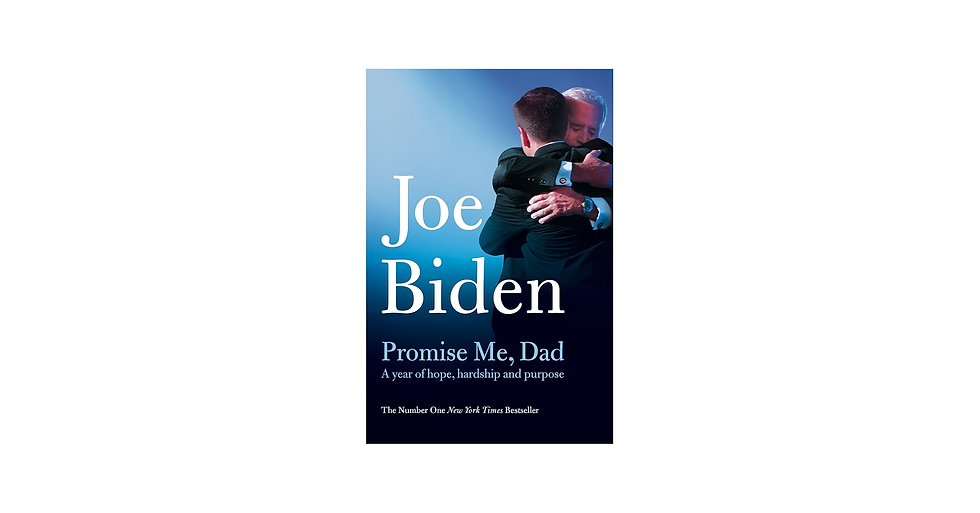
The interviews were conducted for Biden’s 2017 memoir Promise Me, Dad: A Year of Hope, Hardship, and Purpose, published by Flatiron Books (an imprint of Macmillan) on November 14, 2017. The book chronicles the final year of Beau Biden’s life as he battled brain cancer, interwoven with Biden’s duties as vice president and his decision not to run for president in 2016.
It debuted as an instant #1 New York Times bestseller. Mainstream reviews largely praised the personal sections on grief. The New York Times called it “honest, raw and rich in detail.” The Guardian described it as a “moving” account. Other reviewers noted the political passages felt self-promotional or campaign-oriented, with Biden highlighting his foreign-policy work and middle-class credentials in ways that read to some as positioning for a future run.
The commercial and financial backdrop is significant. Publishers Weekly reported in 2017 that Biden’s multi-book deal with Flatiron was valued at $8 million. Special Counsel Hur’s report explicitly referenced the $8 million advance Biden received for the book proposal that became Promise Me, Dad. Hur noted Biden had “strong motivations” to retain and consult the notebooks after leaving office, including their value for the book project. House Judiciary Committee Chairman Jim Jordan and other critics later highlighted the $8 million figure as providing a clear financial motive for ignoring proper handling rules—an “8 million dollar motive,” in Jordan’s words—though no formal charges of kickbacks or related corruption were brought in connection with the book deal itself.
Biden had publicly denied sharing classified information with his ghostwriter. The tapes contradict that denial. The redacted transcripts show blocks of CIA- and Defense Department-protected material precisely where Biden describes Situation Room meetings, CIA briefings, and other sensitive national-security discussions.

The legal distinction remains straightforward. As Vice President, Biden possessed declassification authority. Once he left office, that authority ended. The recordings document him treating the material as classified both before and after leaving office, then sharing it with an uncleared individual and retaining it at his private residence. Those post-office acts form the core of the unauthorized disclosure and improper retention evidence identified by the special counsel. The large advance for the book that grew out of those same notebooks supplied what Hur himself described as a strong motivation.
Selective enforcement of the laws governing classified information continues to undermine public confidence. When a former Vice President and later President can share classified notebooks with an uncleared ghostwriter to support an $8 million book deal, retain the material after leaving office, and then litigate for years to keep the evidence sealed, the appearance of unequal application of the law becomes impossible to ignore.
The American people can now hear the evidence in Biden’s own voice. Accountability delayed is still accountability owed.
— Sources: Oversight Project release (July 27, 2026); Special Counsel Robert Hur Report (February 2024); Executive Order 13526; Publishers Weekly (2017 book deal reporting); contemporaneous coverage from the New York Times, The Guardian, Washington Examiner, Fox News, National Review, and Just the News.