
D.C. Circuit Gives Temporary Green Light to Trump USPS Mail Ballot Rule — What It Means for California and the November Midterms

A three-judge panel of the U.S. Court of Appeals for the D.C. Circuit on Friday temporarily stayed a lower-court injunction, allowing the U.S. Postal Service to continue advancing a proposed rule tied to President Trump’s March 31 executive order on election integrity.
The unanimous order pauses U.S. District Judge Emmet G. Sullivan’s block on the Postal Service’s proposed standards for mail-in and absentee ballots. The panel found the USPS made a “strong showing” that it is likely to succeed on arguments that the challenge is not yet ripe and that the measure likely falls outside a 2021 settlement agreement. The judges also accepted the agency’s claim of irreparable harm if it cannot finalize rules before the November 2026 midterms, noting “there can be no do-over” once the election occurs.

The ruling is temporary. Litigation continues. Separately, a Massachusetts federal judge’s earlier ruling continues to block key parts of the executive order in roughly two dozen mostly Democratic-led states, including California.
Background: Executive Order 14399
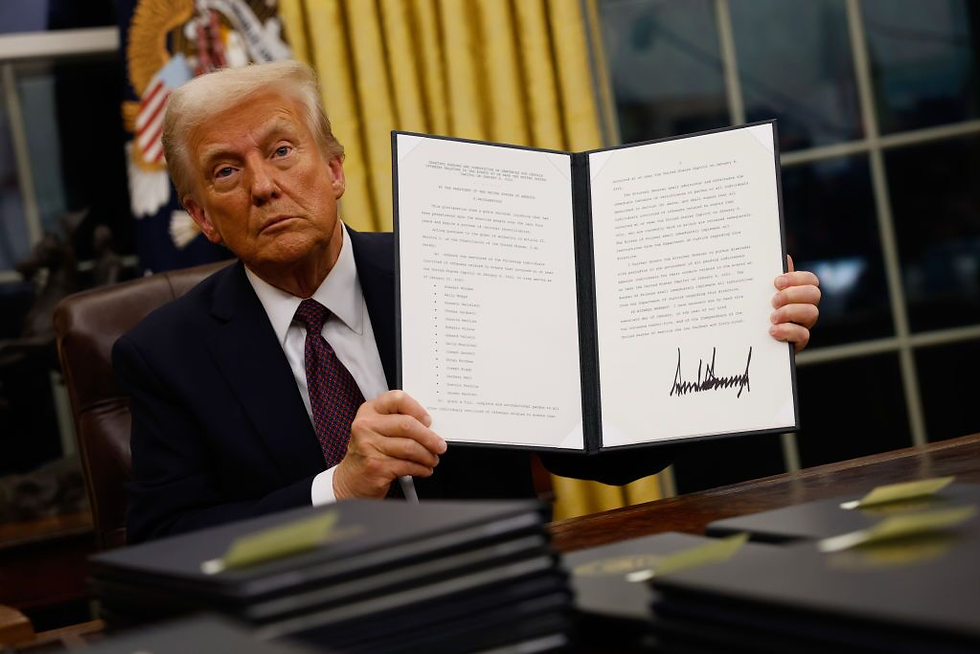
On March 31, 2026, President Trump signed Executive Order 14399, “Ensuring Citizenship Verification and Integrity in Federal Elections.” It directs federal agencies to strengthen verification that only U.S. citizens vote in federal elections and to modernize mail-ballot procedures through the USPS.
Key provisions require the Postmaster General to establish uniform standards for mail-in and absentee ballots. These include use of official Election Mail envelopes with unique tracking barcodes, states providing lists of eligible mail voters, and USPS transmitting (sending out) ballots only to individuals on those approved lists. Postmaster General David Steiner has stated that under the proposed regulation, the Postal Service would not deliver mail ballots in states that refuse to provide the required lists, telling lawmakers that the goal is to ensure “the right ballots are going to the right people.”
Impact if California Continues to Refuse Cooperation
California is one of the plaintiff states protected by U.S. District Judge Indira Talwani’s June 25 injunction in State of California v. Trump. That order remains in effect. On July 7, Talwani denied the Trump administration’s request to stay her ruling pending appeal. The case is now before the First Circuit Court of Appeals. As of mid-July, no stay has been granted by the appeals court.
As long as the Talwani injunction holds, the USPS cannot refuse to deliver mail ballots in California based on the executive order or proposed rule. California’s universal vote-by-mail system should continue operating as usual for the November midterms.
If the injunction is later stayed or overturned and California continues to refuse to submit the required voter or participation lists to USPS:
The Postal Service has stated it would refuse to accept and transmit (mail out) the ballots.
California automatically mails a ballot to every registered voter. A refusal by USPS would mean those ballots simply would not go out through the mail.
Voters would then have to rely on in-person voting at limited vote centers, drop boxes (where available), or other alternatives. This would create significant disruption, especially in rural counties like Shasta where mail voting is the dominant method and in-person options are sparse.
Return of completed ballots could also face new tracking and envelope requirements, adding further complications.
Election Day is November 3, 2026 — roughly 105 days away. California counties typically begin mailing ballots about 29 days before the election (early October). The USPS was directed to finalize its rule by early August, but ongoing court fights make the timeline uncertain.
Local Perspective
First Assistant U.S. Attorney Bill Essayli (Central District of California) responded to the D.C. Circuit ruling on X:
“This ruling is a win for election integrity and would have significant implications for states like California that refuse to submit their voter rolls to verify compliance with federal election laws.” — @USAttyEssayli, July 18, 2026
Essayli’s office has been investigating alleged election irregularities in California and seeking greater transparency in voter rolls.
For Shasta County voters, the practical risk remains tied to the Massachusetts case. If California’s protection is lifted and the state still refuses to cooperate, the state’s heavy reliance on mail ballots could leave many residents without the ballots they expect in their mailboxes.
Shasta Unfiltered will continue monitoring both the D.C. Circuit and First Circuit cases as the midterms approach.
Sources: D.C. Circuit order, The Hill, Democracy Docket, Votebeat, Federal Register proposed rule, White House EO text, statements by Postmaster General Steiner, X post by @USAttyEssayli.


