Trump Hails Auto Industry Revival at GM’s Milford Proving Ground


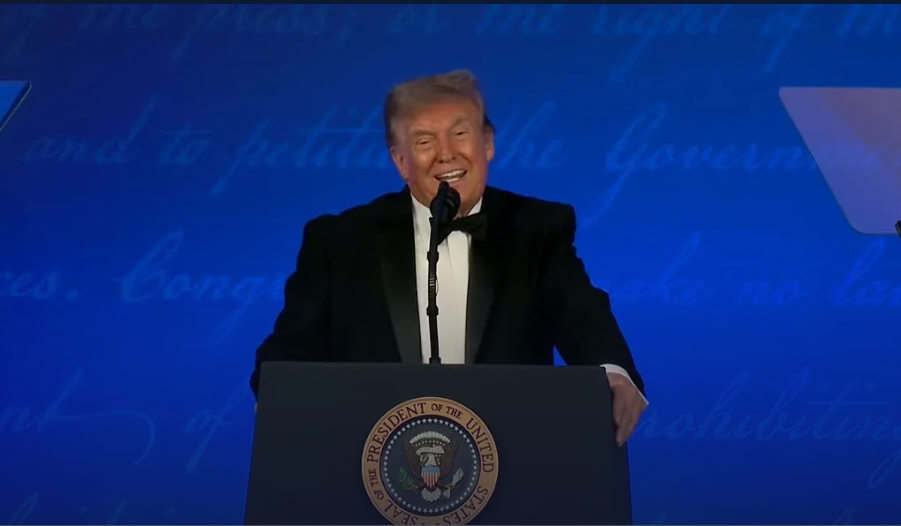
President Donald Trump visited General Motors’ historic Milford Proving Ground in Michigan on Monday, marking the first presidential stop at the storied testing facility. Speaking to auto workers, executives, and local officials, Trump framed his administration’s tariffs, deregulation, and manufacturing policies as the driving force behind a resurgence in American auto production, while sharply criticizing prior Democratic leadership and outlining broader economic and security priorities.
GM CEO Mary Barra opened the event by welcoming Trump and highlighting the company’s deep roots in U.S. manufacturing. She noted that GM employs more people than any other automaker in the United States and plans to spend more than $16 billion this year on manufacturing and research and development. The visit coincided with celebrations of America’s 250th anniversary, with Barra emphasizing that “GM’s story is part of this country’s story.”
Trump, introduced as the 45th and 47th president, entered to a performance of “God Bless the USA.” He opened with personal remarks about his late father’s fondness for Cadillacs—recalling how his father viewed a new one every two years as the ultimate luxury—and mentioned the hope of ending daylight saving time if the Senate approves the bill. He praised the vast proving ground itself, calling its five-and-a-half-mile test track one of the largest asphalt expanses he had ever seen and noting its role in developing iconic vehicles including the Chevrolet Corvette and the presidential limousine known as “The Beast.”
Tariffs, Investment, and Manufacturing Comeback
The core of Trump’s address focused on trade and industrial policy. He argued that decades of “globalist” decisions had allowed foreign competitors to “steal your jobs, pillage your factories, and loot the crown jewels of American industry.” He credited his 25 percent tariffs on foreign automobiles and trucks with reversing that trend, claiming the measures have boosted U.S. production while generating hundreds of billions in revenue.
“If you make your truck or your car in a foreign country, you have to pay for the privilege of sending it into our market,” Trump said. “But if you build in a factory in Michigan or someplace in our country… you pay zero tariff.”
He pointed to specific gains at GM, including expansion at “Factory Zero” in Detroit for models such as the Chevrolet Silverado, GMC Sierra, Hummer, and Escalade. Trump said GM has invested $9 billion over the past two years to bring production back to the United States and has increased truck and SUV output by 20 percent in 2026. Broader claims included more than $19.2 trillion in investment commitments secured in roughly one year under his administration, compared with less than $1 trillion over four years under President Biden, and a 71 percent reduction in the U.S. trade deficit with China.
Trump also highlighted the end of Biden-era electric-vehicle mandates and Corporate Average Fuel Economy (CAFE) standards, which he said would have “crushed the U.S. auto industry.” He announced clearance for American companies to produce “tiny little cars” popular in Europe and noted that interest on auto loans is now fully tax-deductible—but only for vehicles made in America. Additional tax measures he cited included no tax on tips, overtime, or Social Security benefits.

Border, Economy, and Political Contrasts
Beyond autos, Trump listed a series of national achievements: the stock market reaching 73 all-time highs, 401(k) balances rising by an average of $32,000 or more, more Americans employed than at any point in history, and inflation falling at its fastest rate in more than six years. On immigration, he asserted that zero illegal border crossings have occurred for 15 consecutive months and that the murder rate has dropped to its lowest level in 125 years.
Democrats were spoken of as advancing “communist” policies, open borders, high taxes, and social agendas he described as extreme, while portraying Republican majorities as essential to protecting the gains. Trump introduced several Michigan Republicans, including Reps. Lisa McClain, Tim Walberg, Tom Barrett, and John James, Senate candidate Mike Rogers, and others, urging support for their races.
Foreign policy references included pressure on Iran, including the destruction of much of its navy, air force, and drone/missile capabilities—and operations involving Venezuela. He reiterated that "Iran will never have a nuclear weapon.”
In addition to economic and industrial themes, Trump underscored what he portrayed as foundational fights for the country’s future. He urged passage of the SAVE Act to require voter photo identification and proof of citizenship, arguing that secure, transparent elections are essential to preserving democracy and preventing fraud—particularly by limiting mail-in ballots to cases of illness, disability, military service, or travel. He also strongly opposed what he called the “mutilation of children” through gender-transition surgeries and related medical interventions for minors, as well as the participation of biological males in women’s sports, framing these as critical protections for children’s well-being, fairness in athletics, and traditional values against policies he labeled radical and destructive.
Michigan Context and Closing Message
Michigan’s auto heritage featured prominently. Speakers from the stage, including local officials and candidates, credited Trump with saving domestic manufacturing and delivering F-15 EX aircraft to Selfridge Air National Guard Base. One longtime supporter, Brian Pannebecker, a retired Michigan autoworker and the founder of "Auto Workers for Trump," was invited onstage and affirmed that jobs are returning to Metro Detroit plants.
Trump closed with a familiar refrain, declaring that “the golden age of America is upon us” and that the auto industry and General Motors are leading the way. “With your help… we will make America great again,” he said to applause.
The event underscored the administration’s emphasis on protectionist trade measures and domestic production as central to economic strategy, particularly in a state long defined by the auto sector. Supporters at the proving ground heard a message of industrial revival and political urgency ahead of midterm contests; critics are likely to challenge the scale of the investment and job figures cited, as well as the long-term effects of tariffs on consumers and global supply chains.