
American Patriot Series – Haym Salomon – The Financier Who Helped Buy American Independence


In the closing months of the Revolutionary War, George Washington faced a crisis more dangerous than any British army. His troops were unpaid, hungry, and edging toward mutiny. The Continental Congress had no money. Robert Morris, the Superintendent of Finance, had none either. Washington’s reply was sharp and immediate: “Send for Haym Salomon.”
That summons brought forward one of the most consequential and least-remembered patriots of the founding generation — a Polish-born Jewish immigrant whose skill, courage, and personal fortune helped keep the Revolution alive when it was most vulnerable.
Haym Salomon was born on April 7, 1740, in Leszno (Lissa), in the Polish-Lithuanian Commonwealth, to a Sephardic Jewish family whose ancestors had fled the Spanish Inquisition. Trained in finance across Europe and fluent in several languages, he arrived in New York City in the early 1770s. He quickly built a successful brokerage business dealing in foreign securities and joined the Sons of Liberty.
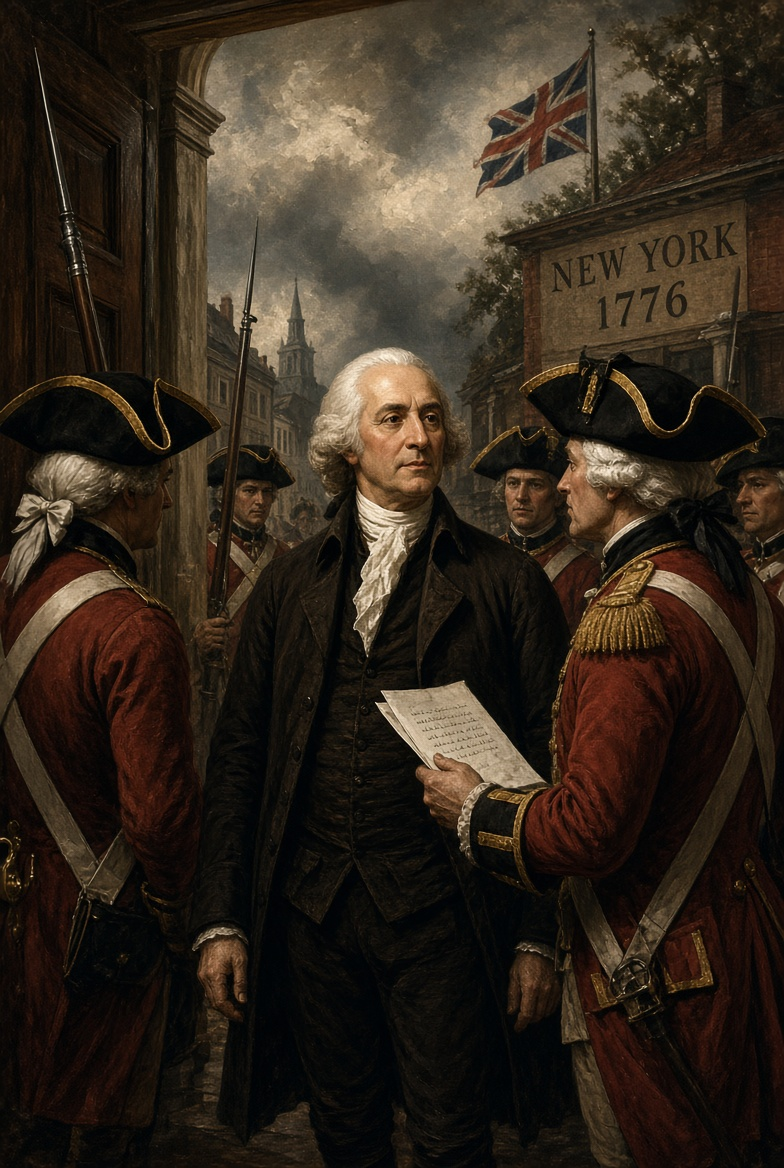
When war came, Salomon committed himself fully to the Patriot cause. In 1776 the British arrested him on suspicion of espionage. Because he spoke German, they pressed him into service as an interpreter for Hessian mercenaries. He used the position to encourage desertions and help American prisoners escape. After a second arrest and the threat of execution, he fled to Philadelphia in 1778.
There he rebuilt his business and became indispensable. He served as the American paymaster for French forces in the United States and worked closely with Robert Morris after Morris took office as Superintendent of Finance in 1781. Salomon specialized in converting French and Dutch loans into hard currency by selling bills of exchange. Between 1781 and 1784, he advanced hundreds of thousands of dollars to the cause — estimates range from more than $200,000 in direct loans recorded by Morris to totals approaching $650,000.

His most critical contribution came in 1781. As Washington prepared the Yorktown campaign, the army needed $20,000 at once. Morris reported that no funds existed. Salomon raised the money through the sale of bills of exchange — roughly $600,000 in today’s dollars. That cash allowed Washington and the French to move south, trap Cornwallis, and force the surrender that effectively ended the war.
Salomon also made personal, interest-free loans to members of Congress living in near-poverty in Philadelphia, including James Madison, who later admitted he had been “a pensioner on the favor of Haym Salomon.” Madison and others received the help without expectation of repayment.
A devout Jew, Salomon co-founded Philadelphia’s Congregation Mikveh Israel and advocated for religious liberty in the new nation. He died of tuberculosis on January 6, 1785, at the age of forty-four, virtually penniless. The government and private debtors never repaid the bulk of what they owed him.
Haym Salomon’s story is one of quiet, essential patriotism. He did not command armies or draft founding documents, yet without the financial engine he helped power, the military victories of Washington, Lafayette, and others might never have been sustained. An immigrant who risked arrest, imprisonment, and his entire fortune for a country that had not yet fully embraced religious equality, he reminds us that liberty is secured by many hands — some holding muskets, others holding the ledgers that keep an army in the field.
His life stands as a powerful testament: the American experiment was financed not only by taxes and foreign loans, but by the personal sacrifice of individuals who believed the cause was worth everything they had.


