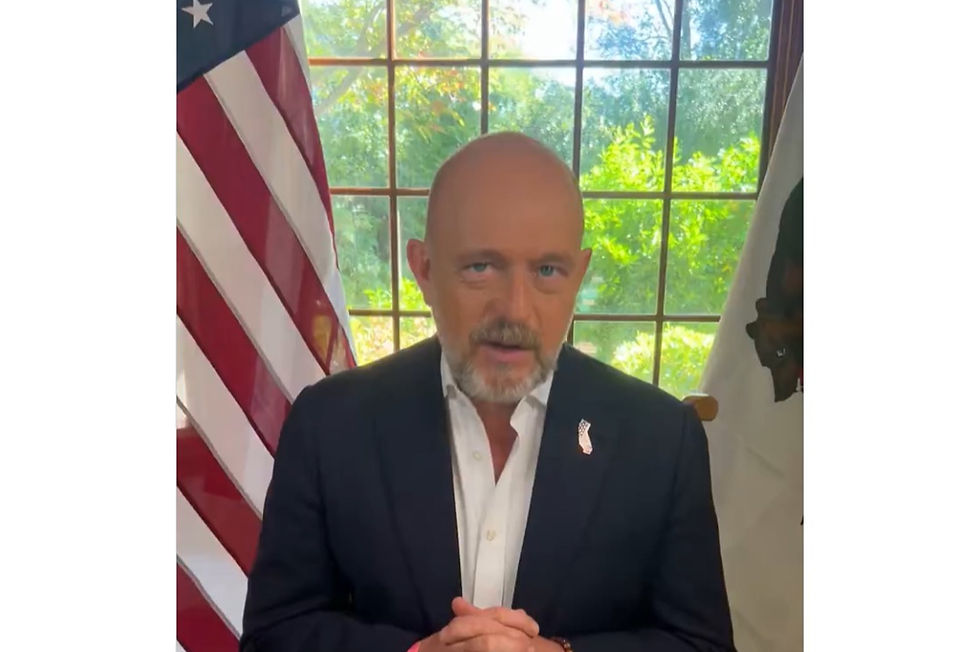
Tom Steyer’s Green Dream: A Recipe for California’s European-Style Energy Nightmare?

He didn't get the memo - the climate hoax is over.

jccsf.org TOM STEYER – "WINNING THE CLIMATE WAR"
With Eric Swalwell now out of the California Governor's race, candidate Tom Steyer has risen to the top in the latest polling. Tom Steyer, the billionaire climate crusader, is still pitching himself as California’s affordability savior in the 2026 gubernatorial race. He vows to slash electricity bills by 25% through competition against utility monopolies and an aggressive push for renewables.
But Shasta County voters and families already battered by wildfire-driven power shutoffs and PG&E rate spikes should take note: Steyer’s environmental playbook is a near-exact replica of Europe’s failed green experiment—one that has produced sky-high energy prices, rolling blackouts, and a wave of business exits.
Steyer, a former hedge-fund mogul turned climate activist, has bankrolled California’s aggressive climate policies for years—from killing Prop 23 to championing the state’s 100% clean-energy mandate by 2045. Now he claims renewables are cheaper, faster, and better while pinning soaring bills on utility greed. Yet California’s residential rates already top 44 cents per kilowatt-hour—the highest in the continental U.S. and 56% above the national average—even though residents use 34% less power than the typical American.

Report from CPUC Public Advocate Finds CA Residential Electricity Prices More than 2X the National Average – California Globe - image californiaglobe.com
Experts call his 25% rate-cut promise unrealistic. It glosses over the real costs of intermittency, massive grid upgrades, wildfire hardening, and battery storage baked into the state’s green mandates.
If you want to know what his policies really mean for California, one only has to look to Europe for the warning signs. Germany’s Energiewende—a massive push that made wind and solar roughly 50% of its power mix—promised cheap, clean energy but delivered the world’s highest household electricity prices and Europe’s most expensive industrial rates. That's roughly double the U.S. average. Factories idled during the 2022 crunch; chemical giant BASF cut production and moved operations to China.

Opinion: Quo vadis, basic chemicals?
The U.K. fared no better, with industrial costs leading the developed world and households rationing energy amid wind-drought blackouts. Negative pricing episodes topped 500 hours in Germany and Spain in 2025—power is wasted when the sun shines, or the wind blows, yet consumers still foot the bill for backups and subsidies.
These aren’t glitches; they’re the physics of unreliable generation. Europe’s emissions dropped 30% since 2005, but the price tag was deindustrialization. Energy-intensive firms fled to cheaper shores in the U.S. and Asia. Political backlash is growing—Germany is delaying heat-pump mandates, the U.K. is postponing projects—as voters reject unaffordability.
California is already traveling the same road, thanks in large part to policies Steyer helped shape. Tesla, Chevron, and GAF Energy have relocated their operations to Texas to take advantage of cheaper power. NVIDIA and Samsung passed on the state for Arizona. Between 2018 and 2021 alone, 352 companies exited California, citing energy costs alongside taxes and regulations. Green mandates now threaten 148,000 oil-industry jobs and hundreds of thousands more in manufacturing. Households could face an additional $17,000–$20,000 per family by 2050 to support the transition.
Steyer’s proposed fix—microgrids and rooftop solar—ignores the $27 billion wildfire-hardening tab, the enormous transmission lines needed for remote renewable farms, and the trillions in battery storage Europeans have already paid for the hard way.
California’s wildfire-scarred power grid underscores the reliability challenge.

thenation.com California Is Burning—Nationalize PG&E | The Nation
Renewables still require fossil-fuel backups for reliability, which drives up overall system costs despite heavy subsidies. Europe’s crippled industry is the cautionary tale: more green zealotry means higher rates for Shasta County families, AI data centers fleeing to Nevada, and factories heading to Texas.
Voters in Redding and across Northern California deserve affordable, reliable power—not a billionaire’s recycled European fantasy. If Steyer wins, expect rolling brownouts, $2,000 monthly bills for industrial users, and “For Sale” signs on more factories.