
Sites Reservoir: A Case Study in Everything Wrong in California
California officials recently celebrated a long-awaited milestone for the Sites Reservoir project: the State Water Resources Control Board's final approval of a water-right permit in early November 2026. Governor Gavin Newsom’s office and project supporters framed it as clearing the path for the state’s largest new reservoir in more than 50 years—an off-stream facility near Maxwell in Colusa and Glenn counties designed to hold 1.5 million acre-feet of Sacramento River water diverted during high flows.
The reality is less triumphant. No construction has begun. The project remains years from turning dirt, financing is incomplete, and the total cost has ballooned into the multi-billion-dollar range while hundreds of millions have already been spent on studies, permits, and process. Sites is not an isolated case. It is the latest chapter in California’s long pattern of reservoir proposals that consume public money, generate paperwork, and deliver little or no new storage.
Aerial view of the proposed Sites Reservoir site near Maxwell, California (photo by Kelly M. Grow / Concept rendering of the proposed Sites Reservoir (image used for illustration in public reporting o
Money Spent, Progress Deferred
The Sites Project Authority (formed in 2010) and partners have spent roughly $180 million since 2015, according to the project’s own 2025 annual report. That sum covers engineering, permitting, planning, real estate, program operations, and related costs—none of it for dams, pipelines, or stored water. Preliminary studies from 1996 to 2014 alone cost about $50 million.
Current estimates put total project costs at $6.2–$6.8 billion (with some figures citing a $7.5 billion “governance estimate” in 2024 dollars and nearly $10 billion in escalated year-of-expenditure dollars through the mid-2030s). State Proposition 1 (Water Storage Investment Program) eligibility stands at about $1.36 billion after recent inflation adjustments. Federal contributions through the Bureau of Reclamation and related programs have reached roughly $780 million. The balance is expected to come from participating water agencies under a “beneficiary pays” model.
Where has the money gone? Primarily into compliance: environmental impact reports (multiple iterations), water-rights proceedings, Clean Water Act permits, Endangered Species Act consultations, streambed alteration agreements, and coordination across state, federal, and local agencies. One project official noted that planners had to obtain 45 different permits over an eight-year period. The water-right process itself involved dozens of hearing days, dozens of parties, and thousands of documents. Financing from water agencies is still being locked in; construction is optimistically targeted for mid-2027 at the earliest, with substantial completion around 2034–2035.
Time Lost to Process
The concept dates to the 1950s. It was studied intermittently for decades, revived in the CALFED era, and formally advanced by the local joint-powers authority after 2010. Voters approved Proposition 1 in 2014 partly to fund storage. More than a decade later, and more than 70 years after the idea first appeared, the project has regulatory approvals but no reservoir.
Construction schedules have slipped repeatedly—from hopes of starting in the mid-2020s to late 2026 or 2027, with completion pushed to the mid-2030s. Land acquisition, final design, and remaining financing remain outstanding. A separate water-rights hearing on two local creeks is scheduled for 2027.
Hoover Dam as the Contrast
Hoover Dam provides a stark benchmark. Construction began in 1931 after contract award; major features were complete by early 1936—roughly five years—despite the Great Depression, extreme heat, and the technical challenges of a massive concrete arch-gravity structure. First concrete went in during 1933; the dam was dedicated in 1935 and turned over to the government ahead of schedule. It created Lake Mead and has supplied water and power for generations.
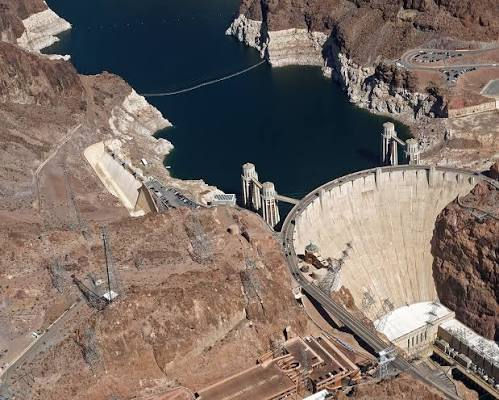
Sites is an off-stream reservoir in a natural valley, not a canyon-spanning dam on a major river. It is far smaller in scale and complexity than Hoover. Yet the modern process has already consumed decades and substantial sums with nothing built. Differences in era, labor practices, and environmental standards are real, but the gap in delivery speed remains extreme.
A Pattern of Failed or Abandoned Projects
Sites is the survivor of a broader Prop. 1 cohort that has largely collapsed under cost growth, regulatory hurdles, and partner disagreements:
Temperance Flat (San Joaquin River): Pursued for roughly 20 years. Withdrew from state funding consideration in 2020 after costs rose and water-rights and environmental issues proved intractable.
Los Vaqueros expansion (Contra Costa County): Costs climbed from under $1 billion to around $1.5–1.6 billion. After years of planning and tens of millions spent (including roughly $24 million in state early funding that was lost), the project was canceled in 2024 when partners could not agree on cost shares and benefits amid tighter regulatory limits on Delta diversions.
Pacheco Reservoir (Santa Clara County): Costs escalated from under $1 billion to more than $3 billion. After spending about $100 million on studies and planning, the Santa Clara Valley Water District halted the project in 2025, citing unaffordable costs, lack of partners, and federal restrictions on water sources.
In each case, money flowed to consultants, environmental documents, legal work, and agency reviews. Physical storage did not materialize. California’s last truly large surface-storage additions occurred decades ago; smaller projects have continued, but major new capacity has been scarce.
Bureaucracy and Over-Regulation as the Core Obstacle
Modern environmental statutes—CEQA, NEPA, the Endangered Species Act, Clean Water Act sections 401/404, water-rights law, and layer upon layer of agency review—create sequential, overlapping requirements that favor delay. Litigation is routine. Even with streamlining measures (such as SB 149 certification for Sites to accelerate CEQA challenges), the process remains protracted. Multiple agencies hold effective veto power or can impose conditions that reduce yield or raise costs. Partners then face higher price tags and reduced benefits, leading some to exit.
The result is a system that excels at process and underperforms at delivery. Taxpayers and ratepayers fund studies that do not produce water. Droughts arrive while reservoirs stay on paper. Sites has advanced further than most recent proposals precisely because of sustained political support and funding, yet it still illustrates the same structural problem: the regulatory apparatus treats large-scale water storage as something to be endlessly analyzed rather than built.
California faces real water challenges—variable precipitation, aging infrastructure, and growing demands. Expanding storage is one tool among others. The record on Sites and its predecessors shows that the current approach of prolonged review, escalating costs, and fragmented accountability has produced more paperwork than acre-feet. Until the balance shifts toward timely construction with clear accountability, projects like Sites will continue to demonstrate how money and time disappear without delivering the water they were meant to store.
Note: Images are included under Fair Use principles for purposes of news reporting, criticism, and commentary on a major public infrastructure project. Aerial site photo credited to Kelly M. Grow / California Department of Water Resources; Hoover Dam images from Bureau of Reclamation / public domain historical sources. Concept illustrations are representative of publicly circulated project materials.


