
Should Shasta County Build Its Own Rural Medical School? Lessons from Pikeville, Kentucky


University of Pikeville - Campus Tours
REDDING — Shasta County leaders are exploring a bold solution to the region’s worsening doctor shortage: a new medical school anchored at Simpson University. The idea is gaining traction through the newly formed Rural Northern California Medical Education Consortium, which has already studied a proven model in the mountains of Eastern Kentucky.
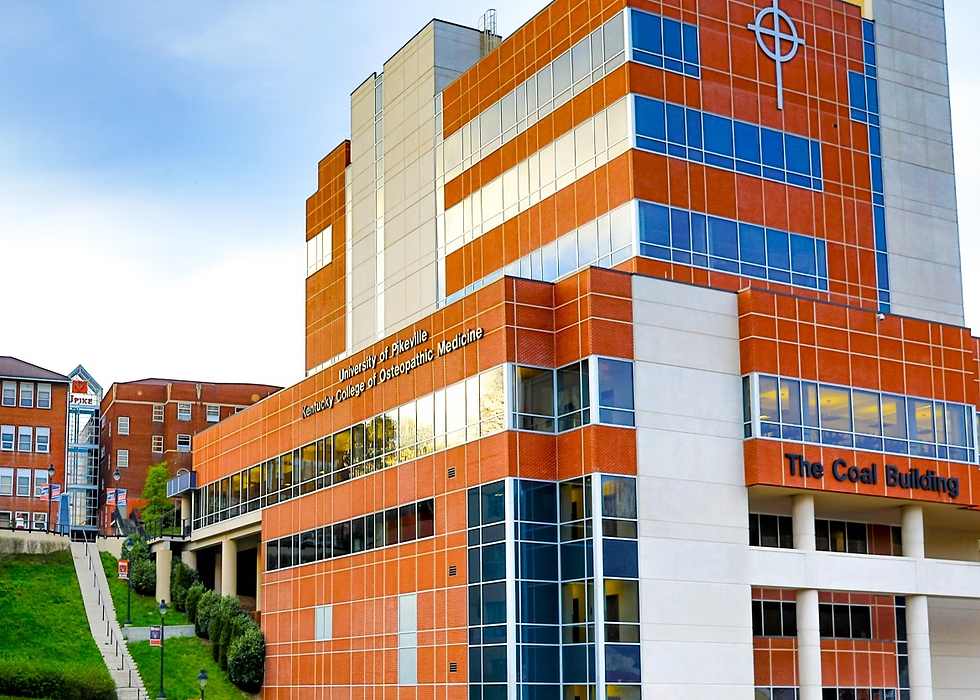
UPIKE Launches New Master of Science in Biomedical Sciences | UPIKE
The Pikeville Story: From Vision to Reality: In the early 1990s, community leaders in Pike County, Kentucky — one of the poorest and most medically underserved areas in Appalachia — recognized a crisis. Primary care doctors were leaving rural communities, and new graduates rarely stayed. After years of planning, Pikeville College (now University of Pikeville) launched its School of Osteopathic Medicine in 1997. The first class of 60 students began classes that September.
Importantly, this was not a greenfield project built from scratch. Pikeville College — a private Presbyterian-affiliated (Christian) institution founded in 1889 — already had an established campus, science facilities, faculty, and administrative infrastructure. The medical school was simply added as a new professional program, leveraging what already existed. A major expansion in 2011–2012 added the state-of-the-art Coal Building, nearly doubling enrollment.
Funding: Smart Use of Federal and Private Dollars: The Pikeville project required some taxpayer support during the early planning phase in the 1990s, when local and state leaders helped lay the groundwork for the school. However, the actual implementation and construction costs were funded entirely through a combination of federal programs and private financing, with no direct city, county, or local taxpayer dollars used for the building or operations.
The 2011–2012 expansion, for example, cost $47.14 million and was financed by:
New Markets Tax Credits ($36.8 million)
A USDA Rural Development loan ($26.5 million)
College equity ($1.5 million)
This public-private partnership structure allowed a small rural college to create a modern medical training facility without burdening local taxpayers.
Striking Parallels — and Manageable Challenges — for Shasta County: The circumstances in Shasta County today mirror Pikeville’s almost exactly. Like Eastern Kentucky, Northern California’s rural counties face a severe shortage of primary care physicians, psychiatrists, OB/GYNs, and other specialists. Shasta County officially declared a public health crisis in 2025. Hospitals and clinics struggle to recruit and retain doctors, while chronic disease rates remain high.
Simpson University, a private Christian college (affiliated with the Christian and Missionary Alliance), brings the same strengths Pikeville College had in 1997: strong pre-med, biology, and kinesiology programs, an expanding nursing school, clinical simulation experience, and regional accreditation. Simpson already serves as a natural pipeline for future health professionals.
Some observers have questioned whether Simpson’s faith-based identity could complicate federal funding or creation of a medical school in general. However, Pikeville’s own history shows these challenges are not insurmountable. Pikeville College was (and still is) a private Presbyterian-affiliated Christian institution, yet it successfully secured the same federal tools — New Markets Tax Credits and USDA Rural Development financing — that Shasta leaders are now eyeing. Both programs are open to faith-based nonprofits when the project serves a clear public purpose, like rural physician training. Simpson would simply need to ensure the funded facilities (classrooms, labs, clinics) remain secular in use, a standard requirement that Pikeville met without issue.
The Lasting Payoff: Doctors, Jobs, and Economic Growth: The results in Pikeville have been transformative. KYCOM has produced more than 2,200 alumni. More than 60% practice in the underserved rural or Appalachian communities, and the school consistently ranks among the top in the nation for sending graduates into primary care in high-need areas.
Economically, the Pikeville project delivered immediate and ongoing benefits:
260 construction jobs during the major expansion - $47m of economic value
64 permanent high-wage jobs created or retained, approx $7m / year
Roughly $8.5 million per year in local spending from additional students
Hundreds of millions in longer-term regional economic output
For Shasta County — which serves a larger population and broader 17-county North State region — the potential impact could be even greater. Local leaders estimate a Simpson-based medical school could eventually train hundreds of new physicians who stay and practice here, generate $10–15 million or more in annual student-driven economic activity, create hundreds of construction and permanent jobs, and produce a decade-long regional economic ripple effect of well over $100 million. Just as importantly, it would improve healthcare access for families across rural Northern California for generations to come.
As Shasta County moves forward with planning, the Pikeville model shows that a rural medical school is not only possible — it can be done in a way that leverages existing local assets, taps federal and private funding, and delivers powerful returns on investment. The question now is whether local leaders, Simpson University, and the community can turn that vision into reality right here in the North State.
So, back to our Headline: Should Shasta County Build Its Own Medical School? The answer is - YES!
Shasta Unfiltered will continue to follow developments with the Rural Northern California Medical Education Consortium.
Sources
University of Pikeville / KYCOM Official Site: https://www.upike.edu/osteopathic-medicine/
KRCR News – Redding leaders explore medical school model (2026): https://krcrtv.com/news/local/redding-leaders-explore-model-for-potential-medical-school
KRCR News – Shasta Supervisors approve medical school support (YouTube): https://www.youtube.com/watch?v=L5CFAmdZ4b8
University of Pikeville KYCOM Video: https://www.youtube.com/watch?v=716QidRRUUc
Historical project details and economic impact reports from UPIKE and NMTC Coalition case studies (archived on upike.edu)
(Photos courtesy of University of Pikeville official channels and campus imagery.)


