"Community Schools" Program in Shasta County Fuels Heated Debate Over Parental Rights, Funding, and Academic Priorities

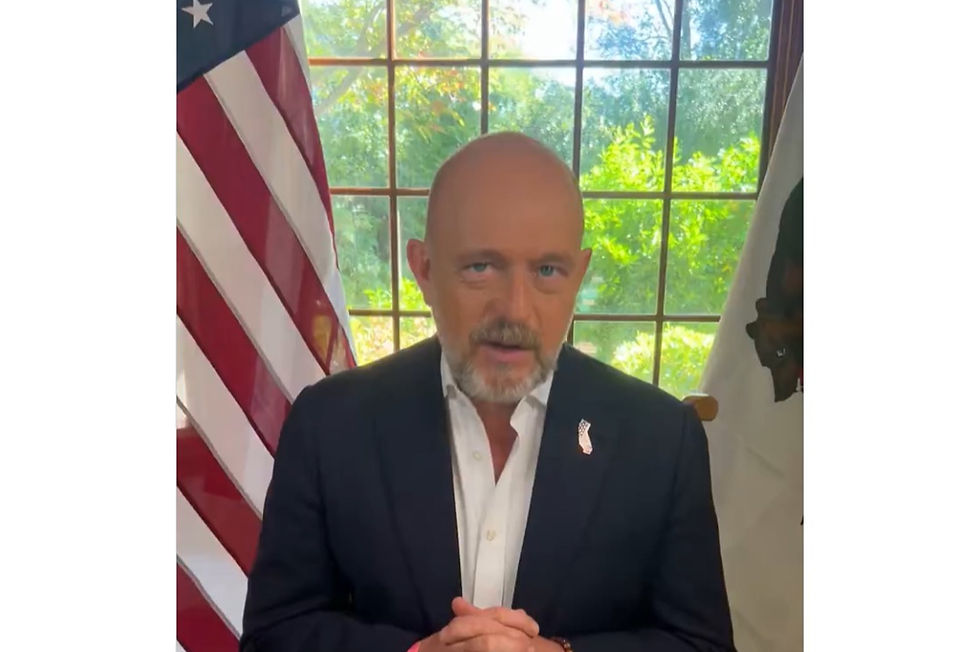
Shasta County, CA — Darin Hale, a candidate for California’s 1st Assembly District, an Anderson City Council Member, and a former Anderson Union High School District trustee, continues to spotlight what he calls a troubling shift in public education: the expansion of the California Community Schools Partnership Program (CCSPP) into on-campus mental health and medical services that can bypass parents.

Hale argues that the program is creating “Medical, Behavioral, and Wellness Clinics on each school site,” and that schools are already treating students without parental knowledge or consent through Medi-Cal partnerships. As an AUHSD board member, he has repeatedly pushed to exit the grant, citing long-term costs, ideological elements like restorative justice, surveys on sensitive topics, and services that distract from core academics.
Local parent advocate Katie Elizabeth Gorman has detailed these concerns in a February–March 2025 investigative series on Mountaintop Times. Gorman, who also serves as Chair of the Shasta County chapter of Moms for Liberty — a national parental-rights organization — describes a “pervasive intrusion” of mental health services, screenings, and wraparound supports onto Shasta school campuses. Her reporting highlights Medi-Cal billing incentives that reward diagnoses, reliance on associate-level providers, data collection through surveys, and the risk that adolescents may access services confidentially under California’s minor consent laws. Gorman and Moms for Liberty argue the “whole-child” model prioritizes social-emotional and health interventions over traditional academics, especially as proficiency rates remain stubbornly low.

Massive state funding is pouring into the program. Since 2021, California has committed more than $4.1 billion to CCSPP statewide, making it one of the nation’s largest investments in community schools. In Shasta County, the Shasta County Office of Education (SCOE) has administered tens of millions in grants — including roughly $42 million cited in local analyses — to support about 30 schools across districts. Additional funding streams, such as the Children and Youth Behavioral Health Initiative (CYBHI), have been layered on hundreds of thousands more for mental health coordinators and services. Critics worry about sustainability: once grants end, districts may face pressure to continue services with local dollars or risk losing staff and programs.
Meanwhile, Shasta County students continue to struggle academically. Recent CAASPP results show English Language Arts proficiency hovering around 46–47 percent (near the statewide average) and mathematics around 35–36 percent (also lagging the state). “Exceeds standards” rates remain low, and the county has not seen dramatic gains despite the influx of holistic supports. Proponents say integrated services improve attendance and long-term outcomes for underserved students; opponents counter that the added bureaucracy and non-academic focus are contributing to mission creep.
The debate has real consequences on the ground. In February 2025, the Anderson Union High School District board voted 4-1 to withdraw from the Shasta County Community Schools Consortium, citing concerns over grant obligations, potential liability, and parental rights. The decision followed months of contentious meetings where Hale, fellow trustee Jackie LaBarbera (a Moms for Liberty-endorsed member), and community members raised alarms. While some services were initially affected, the exit reflected growing local pushback against what critics view as an overreach. A handful of other California districts have similarly weighed or pursued opt-outs, often citing the same fiscal and rights-based worries.
Fueling much of the controversy are California’s minor consent laws — among the most permissive in the country. Under Family Code §6924 and Health & Safety Code §124260, minors as young as 12 can consent to outpatient mental health treatment if a provider deems them mature enough. California also allows minors of any age to consent to contraception and pregnancy-related care, with no parental notification required for abortion. These rules apply even to school-linked services. By comparison, many states set higher age thresholds (14–18) for mental health consent or require parental involvement for reproductive services; 38 states mandate some form of parental consent or notification for abortion where legal.
Supporters, including the California Department of Education and teachers’ unions, praise Community Schools for addressing post-pandemic mental health crises, boosting family engagement, and helping high-needs students through voluntary partnerships. Hale, Gorman, Moms for Liberty, and other parental-rights advocates warn the model erodes family authority, creates unaccountable “empires” of services, and diverts focus from academics at taxpayer expense.
As the 2026 primary approaches, the issue has become a flashpoint in District 1. With Anderson’s recent exit and ongoing statewide funding debates, parents and voters are watching closely to see whether schools will remain centers of academic instruction or evolve further into full-service health and wellness hubs.
Further Reading and Sources
Darin Hale for Assembly campaign site (Community Schools platform) — votedarinhale.com
Katie Elizabeth Gorman’s series, Mountaintop Times Substack (Feb–March 2025) — mountaintoptimes.substack.com
Shasta County Moms for Liberty chapter information — momsforliberty.org
California Legislative Information: Family Code §6924 — leginfo.legislature.ca.gov
Guttmacher Institute: Minor consent and reproductive health state comparisons — guttmacher.org
California Department of Education CCSPP overview and funding — cde.ca.gov
Recent CAASPP results — caaspp-elpac.ets.org
Note: Article was updated with corrections to Darin Hale's and Katie Gorman's current positions.