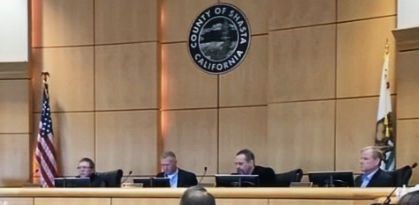
Shasta County Officials Keep Ignoring the Public Records Act. The Law Has Teeth — They’re Just Betting You Won’t Use Them
Opinion Piece:
Shasta County government has a transparency problem, and it is not subtle. Multiple California Public Records Act requests have gone unanswered or have been answered with incomplete, evasive, or non-responsive documents. County officials treat the legal deadlines as suggestions and the public’s right to know as an inconvenience.
The California Public Records Act requires every local agency to determine, within 10 calendar days, whether a request seeks disclosable records and to tell the requester the reasons for its decision. In limited “unusual circumstances,” that deadline can be extended by 14 days, but only with a written explanation. Silence past the deadline is treated as a denial. Yet in Shasta County, silence or partial production has become routine.
One clear example is Public Records Act Request No. 26-1766, filed by Kari Chilson on September 4, 2026. It sought the county’s own administrative records from the December 3, 2024 canvass: observer logs and sign-in sheets, ballot and batch records, machine/tabulator reports (including after 5 p.m.), custody and staff records, video, procedures, and related correspondence. The request was made in part to document alleged malfeasance by a county employee related to those records.
On September 16, the county closed the request after producing documents that did not match what was asked for and without an item-by-item explanation of withholdings. Concerns followed that some of the sought administrative records might have been among materials sent to shredding with 2024 ballot packages. Supervisor Chris Kelstrom later told Action News Now that longtime Elections Office employees had located the records, which he described as misfiled and as materials required to be retained for five years. As of mid-October, however, neither the requestor nor Registrar of Voters Clint Curtis had received the records. A discussion with the requestor confirms the materials still have not been provided.

The process itself raises a basic conflict-of-interest problem. The person at the center of the alleged malfeasance the request sought to document is the same individual the county tasked with locating the information. It is not surprising that the records have not been produced. Assigning the search for potentially incriminating materials to the very employee under scrutiny is not a good-faith search under the Public Records Act. It is a structural barrier to disclosure.
Earlier this month, the First Amendment Coalition filed suit on behalf of Shasta Scout and CalMatters after the county refused to release a federal grand jury subpoena issued to outgoing Registrar of Voters Clint Curtis. The county claimed federal grand-jury secrecy rules barred disclosure. The FAC argues those rules do not apply to a local agency’s own records under the CPRA. Whether the court agrees or not, the pattern is clear: when the records are politically sensitive, the default posture is delay or denial.
This is not new. In 2022, the Record Searchlight sued after the county refused to release the Ellis Report and related documents from an investigation into the sheriff’s office. A judge ordered the records released. The county later paid nearly $90,000 for the newspaper’s attorney fees. In 2024, the county was forced to repeal an illegal local ordinance that charged sequesters for staff time to locate and review records — fees the CPRA does not allow. The repeal came only after the First Amendment Coalition, the ACLU, Shasta Scout, and the Record Searchlight threatened litigation.
County officials have offered various justifications over the years: the volume of requests, the need to consult counsel, the difficulty of searching email or case-management systems. Some of those practical burdens are real. None of them erase the statutory duty to respond on time and in substance, and none of them justify assigning a search for records documenting possible employee misconduct to the employee himself. The NextRequest portal the county now uses does not change the underlying legal obligation. A portal that logs a request and then lets it sit is not compliance.
Critics of the Public Records Act have long noted that it lacks criminal penalties or automatic daily fines. That observation is accurate. The law does include a direct path to court and a mandatory attorney-fee provision. Any person can file a verified petition for writ of mandate in Shasta County Superior Court to compel disclosure. If the requester prevails on a significant issue, the court must award reasonable attorney fees and costs, paid by the agency. Agencies that stonewall are betting that most citizens will not hire a lawyer or file the petition. That bet has worked too often.

The Board of Supervisors and department heads shape the culture of non-response. Staff process requests under the direction of those officials. When high-interest records—election materials, communications involving elected officials, investigative reports—repeatedly disappear into delay or incomplete production, and when the search is placed in the hands of the person whose conduct is at issue, responsibility sits with the people who set priorities and sign off on the legal positions.
Shasta County residents who have outstanding requests should document every date and every communication. A short, specific follow-up letter citing Government Code section 7922.535 and demanding a determination by a firm date creates a clean record.
Organizations such as the First Amendment Coalition have already shown they will litigate against this county when the facts support it. The remedy exists. Officials are counting on the public not to use it.
Transparency is not optional under the law. Continued non-response, especially when compounded by an obvious conflict of interest in the search process, is a choice.
Practical Tips for Shasta County Residents
If you need public records from Shasta County, start with a clear, written request under the California Public Records Act (Government Code §§ 7920.000 et seq.). Be as specific as possible about the records you want, state that you are requesting them under the CPRA, and keep copies of everything you send and receive. A useful starting template is available from the First Amendment Coalition: Sample CPRA Request Letter.
If the county fails to respond within the required time, produces incomplete records, or closes the request without a proper explanation, a writ of mandate is the primary statutory remedy. You can file a verified petition for writ of mandate in Shasta County Superior Court to compel production or a lawful response. Helpful background on preparing and filing such a petition is available at LegalClarity’s guide to sample petitions for writ of mandate in California. Real-world sample petitions filed in other CPRA cases can also serve as models for structure and language (for example, the Voice of San Diego petition and similar public filings).
Document every step carefully, follow up in writing, and remember that prevailing requesters are ordinarily entitled to recover reasonable attorney’s fees and costs from the agency. Local court forms and filing information are available on the Shasta County Superior Court website at shasta.courts.ca.gov/forms-filing. When the county treats the law as optional, the remedy is to use the tools the law already provides.