
Shasta County Board of Supervisors Addressed Mobile Home Park Rent Increases and Flock Cameras Use at October 27, 2026, Meeting


Shasta County Board of Supervisors – October 27, 2026 Meeting Highlights
Before a large crowd of citizens, the Shasta County Board of Supervisors met on October 27, 2026, to address mobile home park rent issues, automated license plate reader (ALPR) technology, library services, water infrastructure problems, budget adjustments, social services funding, and key personnel appointments. The meeting included extensive public comment on several contested items. All Supervisors were in attendance (Chair Chris Kelstrom, Matt Plummer, Kevin Crye, Corkey Harmon, and Allen Long.)

Mobile Home Park Rent Stabilization
The County has received complaints from residents in mobile home parks under new ownership/management that their space rents have risen to unaffordable levels. Supervisor Long sponsored a presentation by Tehama County Supervisor Greg Jones, who spoke about his county’s mobile home park rent stabilization ordinance, which follows state law AB1482 standards. AB 1482 is the California Tenant Protection Act of 2019, which took effect January 1, 2020, and is scheduled to sunset on January 1, 2030. It does not cover mobile home parks. AB 1482 and Tehama County's ordinance set limits on annual residential rent increases for covered properties at 5% plus the regional change in the Consumer Price Index (CPI), or 10%, whichever is lower, and requires “just cause” to terminate most tenancies after a tenant has occupied the unit for 12 months (with relocation assistance of one month’s rent for certain no-fault terminations).

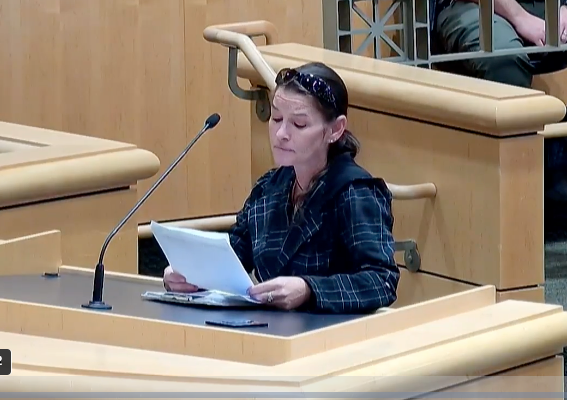
Shasta County supervisors favored pursuing facilitated negotiations with Harmony Communities park management (which has offered a $300 credit) over immediately adopting a similar ordinance. Tenants described sharp space rent increases—some rising from around $450 to projected figures near $921—and presented a petition. Concerns included fixed-income impacts, erosion of homeowners' equity in their mobile homes, and the lack of written guarantees if ownership changes.
The board voted 5-0 to bring the item back in 30 days if no agreement is reached, with direction to provide clear results to residents.

ALPR / Flock Safety Cameras
Public comment was extensive (26 speakers) on the county’s Flock ALPR system. Opponents raised Fourth Amendment and privacy concerns, risks of mass surveillance, data sharing, and potential misuse, citing restrictions in other jurisdictions. Only two speakers were in support of the cameras. Sheriff Michael Johnson gave his perspective, pointing to early results from 24 cameras (14 felony arrests, 4 recovered stolen vehicles, and 2 missing seniors located under Silver Alerts), and noted safeguards such as case-based access, a 30-day data purge for unflagged records, no facial recognition, and SB 34 compliance.


The board approved a 4-1 motion (with Supervisor Long voting no) directing the Sheriff to present a detailed report on usage, policies, effectiveness, and data governance. County Chief Technical Officer Tom Schreiber is requested to attend as well. If the presentation is deemed insufficient, the contract would be terminated; if sufficient, it would be retained. Crye asked the public to attend the meeting where the presentation will be made and to make their opinions known to the board. The board aims to make a decision before the end of November. Funding through June is covered under the prior budget, with a non-appropriation clause allowing termination of the contract with a 30-day notice.
Library Update
Library Director Julia Parson reported on 2024–2025 activities for the Redding, Anderson, and Burney branches. Highlights included the Dolly Parton’s Imagination Library launch (3,718 active children and 577 graduates), strong circulation and program numbers (over 731,000 visitors, 1.15 million physical circulations, and 1,750+ programs), and planned Redding Library flooring work. Public comments addressed transparency, seating, and facility maintenance.
Infrastructure and Supervisor Updates
Jones Valley Water System: Repeated pump failures led to outages and costly diesel pump rentals (around $18,000/month). The state has verbally indicated roughly $1 million for interim replacement; a long-term fix is estimated at $10 million. Supervisor Plummer stated that USDA discussions were scheduled, with outreach to state senators planned. Who is to blame for Jones Valley Pump Failures? - One public speaker stated that the reason behind the failure of two water pumps at Jones Valley was due to Pace Engineering, which allegedly failed to operate the water pumps correctly.
Old Courthouse: Supervisor Harmon initiated a motion to reevaluate the planned demolition and assess commercial potential. Public Works is expected to return with an Environmental Impact Report determination in November. Elisa Ballard of Shasta Unfiltered made a public comment about former Public Works Director Troy Bartolomei's lack of due diligence when he presented options to the board in March 2025. She discovered that Bartolomei had no backup documentation for the proposals he made after her Public Records Request closed 10 days ago. (This was covered in our October 17th article.)
Henderson Ditch: The Henderson Ditch is a longstanding local drainage channel in the Redding area (parts in the city and unincorporated county) that has repeatedly flooded, including in December 2025. City of Redding Public Works materials identify a roughly 275-acre drainage basin that includes city, private, county, and state highway (I-5) properties. Residents have raised concerns about upstream stormwater from I-5 contributing to the ditch, and historical records note similar issues dating back decades. Seven homes suffered losses in 2025. During public comment, residents expressed frustration that more runoff has been funneled into the ditch as development has occurred over the years, with the City and County allegedly failing to maintain or upgrade the ditch's capacity. Now Caltrans has a planned $125 million project that will add runoff to the ditch again.
CEO Dave Rickert announced that Shasta County received the California State Controller's Office Award for County Fiscal Transaction Reporting for Fiscal Year ending June 30, 2025.
Other topics included incomplete roadside mowing that creates wildfire hazards, and the Commission on Aging seeking volunteers to fill vacancies. The meeting also mentioned the District Attorney's staffing shortage, which has resulted in a 1,000-case backlog.
Budget, Social Services, and Contracts
The County's Health and Human Services Agency (HHSA) outlined a transition of Regional Drug Medi-Cal Organized Delivery System administrative oversight from Partnership HealthPlan to CalMHSA (fee-for-service model), expected to save about $500,000 annually and potentially increase net revenue. Services would remain uninterrupted, with a five-year agreement targeted for January 1, 2027.

Revenue projections in Social Services were off by $8 million
Social services reported actual net county costs near the adopted $9.2 million figure, but revenue shortfalls of $8 million in several programs (CalWORKs, Welfare-to-Work, CalFresh/food stamps, and Medi-Cal) and overspending in child welfare, Adult Protective Services, and IHSS (In-Home Support Services), as well as increased costs outside of the HHSA's control, such as increased health care insurance costs, resulted in the use of additional fund balance (leaving roughly $4.3 million before further adjustments).
The County cannot continue on this path with a $1 million per month shortfall. HHSA has cut building expenses, instituted a hiring freeze, and implemented a voluntary time-off-without-pay policy, but these measures haven't offset the increased expenses. On Plummer's suggestion, the board approved motions to issue an RFP (Request for Proposal) for an outside consultant to review revenues, costs, programs, and outline a path of general fund support, with a general fund loan repayment date of February 28, 2027.
Personnel Actions
County Counsel Joseph Larmour's contract was extended for four years on a 3-2 vote, despite public comments questioning the timing before a new board. (Supervisors Plummer and Long voted no.) Plummer objected to the generous severance package, which is not in line with industry norms (18 months versus 3-6 months), and argued the contract should be reviewed at the 3-year mark (which would be in 2028), not now. This was the second time in a month that the item appeared on the agenda for a vote. On September 29, 2026, the item was on the consent calendar (as a proposed new four-year agreement beginning September 30, 2026). Supervisors Long and Plummer pulled it for discussion. The board deadlocked 2-2 after Supervisor Crye recused himself, so the extension failed then. This time, Supervisor Crye changed his mind about recusing himself and voted in favor of the extension. Sheriff Johnson commented that he has found Larmour to be responsive and credits him with saving his department from costly litigation.

John Heath was appointed Public Works Director and Road Commissioner on a 3-2 (Supervisors Crye and Plummer voted no.) following a public hearing. He is a registered civil engineer and land surveyor with almost 27 years of county experience. He will receive a 9% increase in compensation.
Public Comments
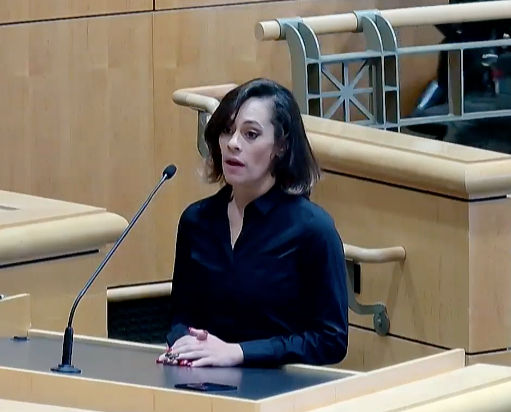
Transitional Housing for Offenders Putting Residents at Risk - A concerned citizen raised alarms about the annual release of an estimated 350 to 450 high-risk parolees—including sexual and violent predators—into the county, questioning the oversight of nonprofit programs that facilitate their transitional housing. The speaker specifically named organizations such as No Boundaries and New Life Discovery Project (NLDP) as providers of such housing, expressing concerns about funding sources, potential conflicts of interest, and the public safety implications of placing these individuals in local communities with limited apparent accountability.
NLDP has been described in local news reports as operating multiple (around five) local motels under master leases, including Shasta Lodge, Stardust Motel, and Deluxe Inn. No Boundaries has focused more on GuestPlace Inn and Suites. Several of these are in or near the Downtown Specific Plan area, which has led to city discussions about zoning, residential hotel rules, and enforcement. The California Department of Corrections and Rehabilitation (CDCR), through its Division of Adult Parole Operations (DAPO), is the agency that authorizes and oversees parole placements.
Shasta Unfiltered looked into what Shasta County or the City of Redding can do to limit this practice.
Strictly enforce existing zoning rules (for example, requirements that motel use as residential/transitional housing meet “residential hotel” classification and obtain proper use permits; Downtown Specific Plan restrictions).
Adopt or strengthen ordinances regulating the operation of transitional housing or “parolee/probationer homes,” including conditional use permits, separation distances from schools/parks/other facilities, density limits, operational standards, and business licensing for nonprofits.
Prohibit or restrict mixed motel use (serving both ordinary travelers and long-term transitional housing clients).
Require nonprofits to obtain proper permits and screening before using local properties for these programs.
Multiple California cities and at least one county have adopted zoning ordinances that limit the density or concentration of parolee/probationer homes and related transitional housing.
Warning to CEO Dave Rickert and County Counsel Joseph Larmour about Elections Documents Shredding

Arnie List, an election-integrity activist from Southern California, has spent several weeks documenting issues in Shasta County's Elections Office. On October 3, documents related to the November 2024 election were shredded, including not only ballots but also log sheets that should have been retained longer. He warned CEO Dave Rickert that County Counsel Joseph Larmour was giving him bad advice and that Rickert would ultimately be responsible for shredding documents that were the subject of an unfulfilled public records request. List said he had recently spent 7 minutes on the phone with someone at Eric Grant's office about the issue. Grant heads the U.S. Attorney’s Office for the Eastern District of California (part of the Department of Justice). Chair Chris Kelstrom made a statement in a report to Action News Now on October 6 that election records sought under a Public Records Act request (PRA Request No. 26-1766, filed by Kari Chilson on September 4, 2026) had been located inside the Elections Office. He described them as having been misfiled by longtime Elections Office employees and distinguished them from certain 22-month retention documents that were shredded. As of this date, the requestor and the Registrar of Voters have not been provided the newly found records. List also mentioned that three whistleblowers have come forward in the Elections Office.
Election Office Not Getting Needed Support from County Offices
Laura Hobbs and other public commenters complained that Registrar of Voters Clint Curtis was not getting adequate support from the County to run the upcoming election. Lighting issues in the office and computer access were cited as some ongoing problems that could interfere with running the upcoming election. Also, Curtis has been denied access to video footage in the office after he discovered employees breaking protocols for access to secured rooms at the Market Street office.
Consent calendar items were approved (excluding one pulled item - C22, an approval of a purchase of a pursuit vehicle for the Sheriff's Office, which was approved later with a modification).
The board held closed session on negotiation and potential litigation, with no reported outcomes.
For in-depth information on controversies surrounding the use of Flock / ALPR cameras, please read prior articles posted by Shasta Unfiltered.


