
Redding City Council Hears Initial Results from Efficiency Consultant


REDDING — Redding’s general fund is in “significant financial distress,” Interim City Manager Michael Webb told the City Council on Tuesday, Sept. 1. Consultants then walked the council through the first batch of “quick wins” from a $300,000 efficiency study — most of them one-time cleanups, not permanent cuts.
Circle 6 Consulting screened $82.6 million in potentially releasable capacity across city funds. After staff validation, $14.3 million was released, recovered or realized. Only about $1.2 million of that landed in the general fund. The bulk returned to water and wastewater reserves, special revenue accounts and internal service funds.
Webb stressed the distinction. Screening numbers were raw data. Validated numbers were what staff and consultants agreed could actually move. Vacancy savings disappear if those jobs are filled. Stale purchase orders and leftover capital-project balances do not shrink next year’s payroll.
The presentation was informational. No vote was required. The larger recommendations — organizational design, overtime, fees, pension options and updated financial policies — are scheduled for Sept. 15, when consultant Nathan Sprague is expected to appear in person.
What the $14.3 million actually is
Consultants and staff grouped the work into four buckets:
Vacant positions. A general-fund hiring freeze began in January 2025; a citywide freeze followed in January 2026. Sixteen general-fund vacancies screened at about $1 million in remaining salary. After cashing out accrued leave, the snapshot dropped to about $780,000. Webb said additional unfilled jobs now represent as much as $4 million in potential salary savings — as long as the freeze holds.
Stale encumbrances. Purchase orders and contracts with little activity for about 12 months. About $797,000 was released back to home departments, including $270,000 to the general fund.
Carryovers. Circle 6 flagged more than $80 million that did not appear to need to roll into the next fiscal year. After review, about $65 million — mostly water and wastewater project money — was sent back to utility reserves instead of sitting in capital accounts. Webb said master-plan assumptions about how fast projects get built have been more aggressive than reality, and leftover project balances had not been swept back to reserves.
Dormant capital projects. A smaller cleanup: $260,000 screened, $18,000 released, $244,000 kept to finish authorized work.


Webb cautioned that some general-fund “releases” belong to streets, grants or impact fees and cannot be spent on ordinary operations.
Items still on the table, not yet finished: possible refinancing of 2013 general-fund lease revenue bonds ($15,000 to $50,000 a year if market conditions improve); CalPERS options including a “fresh start,” pension obligation bonds or a Section 115 trust; and a recent S&P downgrade of the city’s credit rating from A+ to A-minus. The rating agency cited a negative outlook, weaker revenues and a general-fund 10-year plan “in a state of disrepair.”
Sprague, joining remotely with colleague Amanda Ekman, said the quick wins matter but are “not the whole story.” The bigger value, he said, will come from operational and structural changes, with controls so savings do not leak away. “Structure should follow the work, not the other way around.”
Public comment: who owns the mess?
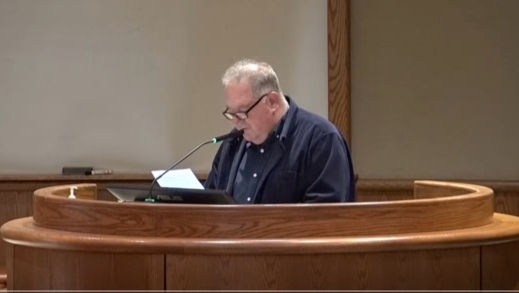
A speaker named Robert presented an analysis prepared with Angela Viegas, a former council member and retired finance director. He said three of Councilmember Tenessa Audette’s accounting allegations did not hold up against the adopted budget — disputed internal revenue, a soccer-field transfer and certain grant/capital expenditures. He credited Audette with raising questions about the budget, however, criticized her for voting for pay increases. Robert argued the city expressed more certainty than the numbers justified: sales-tax shortfalls, a 2023 compensation deal that added about $3.8 million in recurring general-fund cost without a full 10-year affordability analysis, and a third-quarter report that arrived after the budget vote.
“If staff presented it, staff must explain it. If management recommended it, management must defend it. If council members approved it, council members must own it,” Robert said. He later returned to attack the consultant contract itself: the city already employs managers, analysts and a finance department. Releasing old encumbrances, he said, is not a recurring cut. Taxpayers should see permanent annual savings, spans of control, and a 10-year model before deciding whether $300,000 was worth it.

Marge (or Margie) Cantrell pressed for monthly updates on the Park Marina/Riverfront Plan, which she said has dragged since the Kutras-McConnell lease expired at the end of 2021. Staff said the item is expected back before the end of the year. She also warned that retiring supervisors should train seconds-in-command so the city does not rehire retirees at extra pension cost.

Nick Gardner said Henderson Ditch flooding had hit about a dozen houses and that storm drains were not being cleaned ahead of a predicted wet El Niño winter. He also objected to closed-session labor talks while “we’re broke.”
Dolores Lucero, using the name "Shasta County Watchdog," accused Mayor Mike Littau of mocking her at a prior meeting, alleged conflicts involving his wife (who Lucero incorrectly stated was on a school board) and the Mayor's Goosehead insurance business, and threatened federal civil-rights litigation. Littau replied that his wife is not on a school board.

Aaron Moreland of Shasta Street asked the council to revisit changes to Butte Street Boogie Network Project. He said the final environmental document dropped bulb-outs, a new stop sign and crosswalks near Manzanita Hills Elementary to preserve a few parking spaces — changes he argued conflict with the state grant’s pedestrian-safety purpose. Littau invited him to follow up by email.
Council reaction
Mayor Pro Tem Erin Resner asked that the Sept. 15 Circle 6 packet be posted with the agenda by 4 p.m. Thursday, Sept. 10, so the public can read a 50-plus-slide deck before the meeting. Webb said the findings will be attached to the staff report; some slides tied to ongoing union bargaining will be redacted.
Councilmember Jack Munns said encumbrance and contract closeouts were already underway before Circle 6 arrived. Littau asked what will stop the city from needing another expensive consultant every year. Webb said many policies are 15 to 20 years old and were written around the old AS400 finance system, now replaced by Oracle. The phrase he borrowed from Sprague: “ring-fence” the savings with new procedures.
Vice Mayor Paul Dhanuka compared the study to a hospital accreditation cycle — useful every few years, but not at this price every year.
Resner also asked for a clear written list of what the council actually assigned the Financial Advisory Committee, plus best-practice recommendations on budget review so the next council — three seats are on the Nov. 3 ballot — inherits a cleaner process. Audette suggested tying that work to the Sept. 15 Circle 6 agenda. The council agreed the item should come back.
The council approved the consent calendar, including League of California Cities material. Audette, the city’s League representative, said she was glad to see proposed amendments after a long stretch with none.
The meeting then returned to closed session on labor negotiations. No reportable action had been announced when the open session began.
The Sept. 15 meeting is where staff and Circle 6 say the “meat and potatoes” will appear: not leftover purchase orders, but whether Redding will change how it is organized, how it bargains, and how it keeps money from drifting into accounts where no one is watching.
To watch the entire meeting, go to:


