
Redding City Council Approves Mid-Cycle Budget Adjustments, Flags Cash Shortfalls

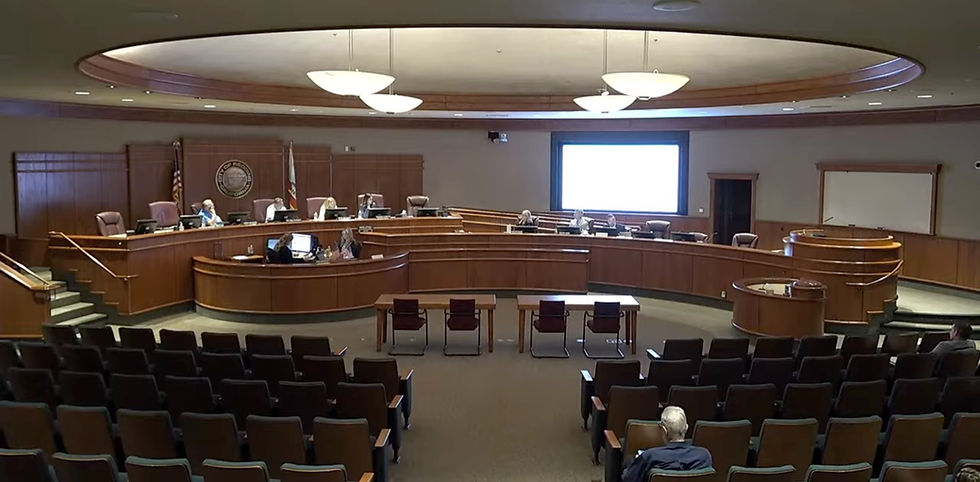
October 12, 2026 - REDDING — The Redding City Council on Monday approved a mid-cycle budget report and resolution that increases citywide appropriations by $4,281,210 for fiscal year 2025-26 while reducing them by $9,041,220 for fiscal year 2026-27, as staff presented updated figures showing tighter cash positions than earlier estimates.
Vice Mayor Dr. Paul Dhanuka led the special meeting. Mayor Mike Littau was initially absent and joined remotely. Council members Tenessa Audette, Jack Munns, and Mayor Pro Tempore Erin Resner were present. Interim City Manager Michael Webb and Interim Finance Director Joe Bowers presented the report. No public comments were made on the open-session items, and the closed session produced no reportable actions.
For the current fiscal year, the largest General Fund expense increase—roughly $3.46 million—covers fire overtime, accrued leave payouts, and police holiday pay that had been omitted from the Oracle budget setup. Other adjustments include fleet maintenance costs that staff described as cross-charges to the electric and solid waste departments rather than new citywide spending. Citywide appropriations rise by the full $4.28 million.

For fiscal 2027, the General Fund sees a net increase of about $2.93 million, driven largely by a projected 12 percent rise in health insurance costs ($1.6 million), higher CalPERS contributions ($500,000), restored fuel charges, holiday pay corrections, and fleet allocations. Electric utility appropriations drop by $15 million, matched by an $11.71 million reduction in projected electric revenue, producing the overall citywide decrease of roughly $9 million.

The updated cash outlook is more constrained than the March estimate. Fiscal 2026 is projected to end with an actual cash balance of approximately $4.155 million, down from the earlier $9.93 million figure. Without further corrective action, fiscal 2027 could close roughly $900,000 in the red because of the lower starting cash, revenue shortfalls, SAFER grant timing adjustments, and $2.45 million in carried-over encumbrances. A revised CalPERS amortization schedule for miscellaneous and safety plans was incorporated into the 10-year model and shows declining obligations and annual savings through 2036.

Council also adjusted several revenue escalators as recommended by Audette. Transient occupancy tax projections that the staff had set at 3 percent growth were reset by the Council at 2 percent growth over 2026 actuals for 2027, with a continuing 2 percent year-over-year escalator, reflecting a four-year compound annual growth rate of negative 2.4 percent amid local closures and room-rate changes. Cannabis and other taxes will remain flat for the current cycle, with a 1 percent ongoing escalator thereafter. An attempt to lower the internal department cross-charge escalator from 3 percent to 2 percent failed, with Audette and Resner voting yes and Dhanuka, Munns, and Littau voting no; the 3 percent rate was retained, with a commitment to revisit the breakdowns in future workshops.
Staff noted accounting process issues, including historical posting of city interest and payroll to the General Fund before manual reallocation, which required midyear corrections. Recommendations include holding accounts and monthly allocations. Grants will be tracked in a dedicated separate fund going forward so that only cash actually received is recognized. The $5.1 million SAFER grant has produced $2.89 million in receipts so far; the remaining $2.2 million is excluded from projections pending FEMA approval of a performance-period extension and supplantation modification. A $2 million federal capital grant listed under general government still requires verification of its status.
Licenses and permits came in roughly $958,000 to $1 million under budget, with building permits at $1.3 million against a $1.9 million target and engineering grading permits at $240,000 against $630,000. Fines and penalties exceeded budget by $1.3 million, largely from code enforcement and cannabis, but bad-debt expense of $800,000–$900,000 offset much of the gain. The council directed future reports to show bad debt netted against gross service charges.
A deeper historical review of licenses, fees, and secondary line-item escalators was deferred to the fiscal 2028 budget process beginning in December 2026 or January 2027 because of staff workload and reporting deadlines. The council accepted the staff report and adopted the resolution as amended.
Next steps include incorporating the approved escalators into the updated 10-year plan for the October 20 meeting, a written update on the FEMA SAFER modification request and billing timeline, recommendations on internal finance process improvements, and a breakdown of service charges, bad-debt offsets, and permit shortfalls. Unresolved items flagged in the meeting notes include full reconciliation of budgetary versus actual ending cash, the long-term cash trajectory if transition measures are not adopted, formal implementation timelines for the new accounting processes, and the return date and revenue assumptions for any short-term rental ordinance affecting transient occupancy tax collections.
The adjustments continue work begun at earlier meetings in which the council adopted more conservative sales- and property-tax assumptions and approved cost-cutting steps that included closing Fire Station 3 and leaving vacant police positions unfilled.
The next city council meeting is set for Tuesday, October 20, 2026, starting at 6 p.m. at the City Council Chambers, 777 Cypress Avenue, Redding, CA 96001.
To view the October 12 meeting, go to:
Please note that the meeting starts at the 24:30 minute mark of the recording.


