
Oregon Fuel Crisis - Could Forecast a West Coast Crisis

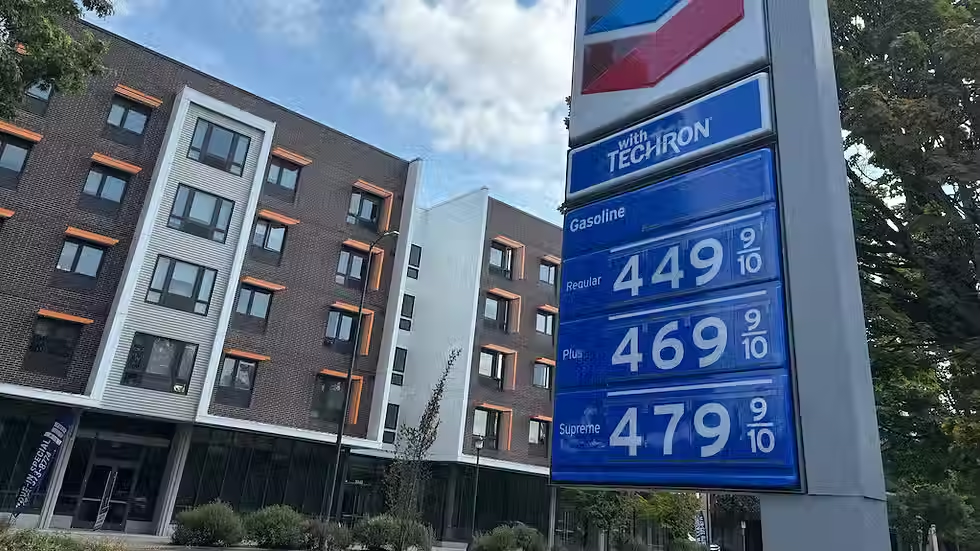
The Pacific Northwest's fuel supply chain, long characterized by its fragility, came under scrutiny in late November 2025 when Oregon faced a potential gasoline shortage due to a pipeline failure. While the incident was contained without widespread disruptions, it exposed structural weaknesses that could cascade across the West Coast. Oregon's reliance on imported fuels, compounded by stringent environmental regulations and regional refinery pressures, mirrors trends in California and Washington. As regulatory alignments deepen and global energy transitions accelerate, experts warn that Oregon's vulnerabilities may evolve into a full-blown West Coast crisis, marked by higher prices, supply volatility, and energy insecurity. This article examines the roots of Oregon's challenges, their interconnections with neighboring states, and the long-term risks for the region.
The 2025 Oregon Fuel Emergency: A Symptom of Deeper Issues
In November 2025, a leak in the BP-operated Olympic Pipeline—responsible for delivering over 90% of Oregon's gasoline, diesel, and jet fuel from Washington refineries—prompted intermittent shutdowns and a full closure around November 17. Governor Tina Kotek declared a state of emergency on November 24, waiving trucking regulations to enable alternative deliveries via barge, rail, and road. The pipeline partially resumed operations the next day, with full repairs by early December, and the emergency lifted on December 9.
No long lines at gas stations materialized, but prices rose modestly (4–16 cents per gallon), highlighting Oregon's precarious position: the state has no refineries, negligible crude oil production, and limited storage (10–15 days' supply). This dependency on a single pipeline creates a "single-point-of-failure" risk, exacerbated by geographic isolation and costly alternatives. As of December 30, 2025, Oregon's average gasoline price sits at $3.45 per gallon, down from November peaks but still among the nation's highest.
Historically, Oregon has never hosted major crude oil refineries due to a lack of local resources and early exploration failures in the 20th century. Even bio-fuel projects, like the failed Red Rock Biofuels initiative, have stalled amid regulatory hurdles and costs. It is largely dependent on Washington state and until recently California refineries.
Regulatory Barriers: Fueling Oregon's Fragility
Oregon's environmental policies, while advancing climate goals, contribute significantly to its supply chain weaknesses. The Clean Fuels Program (CFP) mandates carbon intensity reductions (37% below 2015 levels by 2035), adding costs of about 9.8 cents per gallon for gasoline in 2023. Strict permitting, local ordinances (e.g., Portland's fossil fuel restrictions), and opposition have prevented new infrastructure for decades. High gas taxes (around 40 cents per gallon) further inflate prices.
In early 2025, Governor Kotek reached out to Chevron for supply assistance, offering incentives amid pipeline vulnerabilities. Chevron's non-committal response, echoed by CEO Mike Wirth's criticism of "unrealistic" policies, underscored how regulations deter investment. These factors not only sustain Oregon's risks but also amplify them during disruptions, setting a precedent for regional contagion.
California's Refinery Closures: The Domino Effect Begins
California's aggressive decarbonization has led to rapid refinery attrition, indirectly threatening Oregon and the broader West Coast (PADD 5 district). Key closures include Phillips 66's Los Angeles facility (139,000–147,000 b/d) by Q4 2025 and Valero's Benicia refinery (145,000 b/d) by mid-2026, slashing 17–20% of state capacity and ~11% regionally. Prior conversions, like Phillips 66 Rodeo to renewable diesel, have already reduced conventional output. California refineries can no longer meet California's insatiable demand for fuel. As such, they are no longer able to serve Oregon, making Oregon solely reliant on Washington refineries.
Driven by the Low Carbon Fuel Standard (LCFS) and cap-and-trade, these changes increase reliance on imports, heighten price volatility (EIA forecasts up to $4.19/gallon in 2026), and strain interconnected markets. For Oregon, reduced California supply intensifies competition for Washington-sourced fuels, potentially exacerbating pipeline strains and costs. Worst-case scenarios warn of $5–$8/gallon spikes across affected states.
Washington's Refineries: Stability Now, Uncertainty Ahead
Washington's five refineries remain operational, bolstered by Canadian crude via the Trans Mountain Pipeline, but face mounting pressures from policies mirroring California's. The Climate Commitment Act (CCA) and Clean Fuels Program impose carbon pricing and intensity reductions, with market linkage to California planned for 2026–2027. With Washington now headed in the same direction as California from a regulatory standpoint. There are great concerns that refineries there will begin looking for lower cost options.
Short-term stability is likely, with no 2026 closures and potential expansions (e.g., HF Sinclair's pipeline projects). However, long-term trends portend conversions or closures by 2030–2045, as net-zero goals erode margins. Washington may fare slightly better due to secure crude access and economic incentives, but convergence with California's path—evident in rising compliance costs—could lead to similar attrition. Circumstances could change suddenly if Canada is able to open pipelines diverting crude to other states with lower refining costs. If Washington, is succesful in retaining its refineries, prices for its products will certainly rise due to carbon regulations and taxes.

From Oregon to the West Coast: Pathways to a Regional Crisis
Oregon's issues are not isolated; the West Coast's integrated supply chain means disruptions ripple outward. California's closures will heighten demand on Washington's refineries, straining the Olympic Pipeline and elevating prices across Oregon, Washington, Arizona, and Nevada. Regulatory harmonization, including shared carbon markets, will amplify costs, discouraging investments and accelerating transitions.
Forecasts for 2026 predict Oregon prices at $3.70–$4.20 per gallon, with broader West Coast volatility. Over time, as refinery capacity contracts (potentially 1–2 Washington closures by 2035), risks of shortages during events like earthquakes or global oil shocks grow. Economic models warn of emissions leakage and higher consumer burdens if transitions falter.
Conclusion: Navigating the Trade-Offs
Oregon's 2025 crisis serves as a warning: legislators must seek regulatory balance or risk losing all refining capacity. Although the Washington refineries seem secure for the short term, the regulatory climate there is discouraging investment in aging infrastructure. In addition to securing fuel production channels all the western states need to enhance their storage capacity, modify regulations to ensure fuel imports (rail, road and sea) are economical and create an economic climate that retains refining capacity.
As states like Washington follow California's regulatory lead, the window for fuel supply resiliency narrows—urging policymakers to act before localized issues become regional catastrophes.


