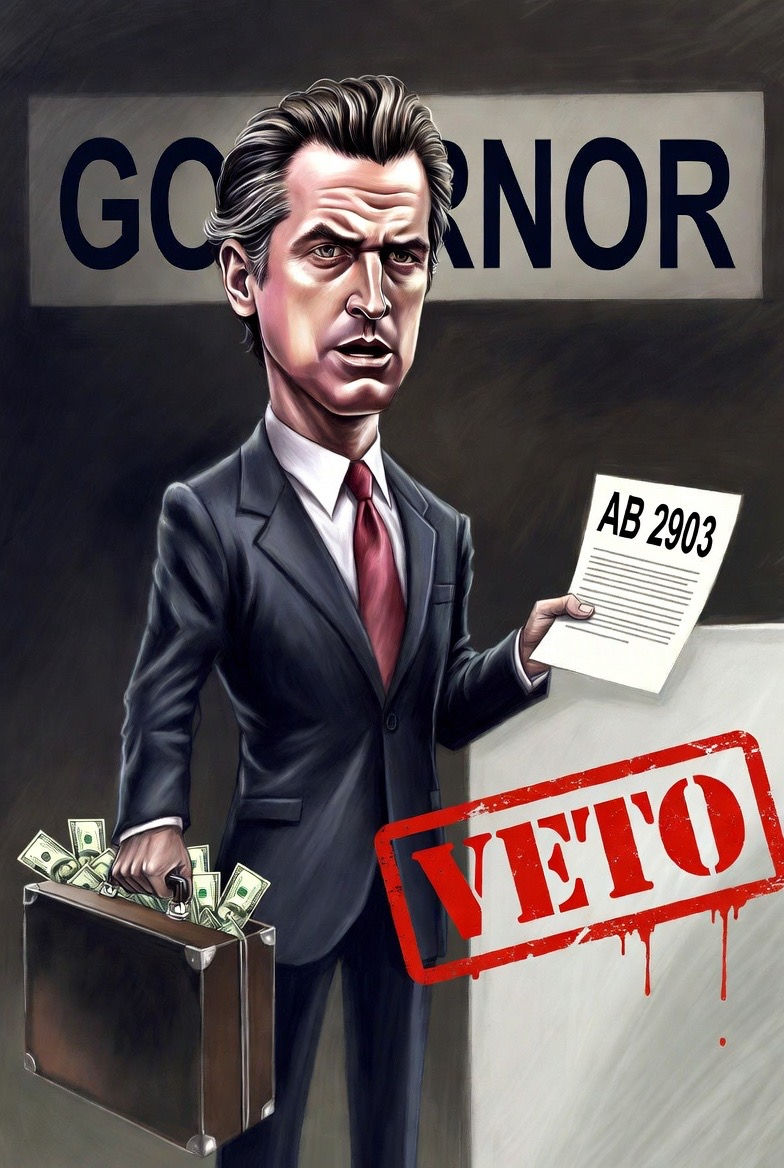
Opinion - California's Constitutional Collapse
- Rex Ballard

- Jan 25
- 4 min read
From a Constitutional Republic to Dysfunctional Direct Democracy

California was once the shining symbol of American dreams—innovation, opportunity, and endless possibility. Today, it's a cautionary tale: skyrocketing costs, crumbling infrastructure, rampant homelessness, wildfires raging out of control, and a mass exodus of families and businesses. These aren't random misfortunes. They're symptoms of a profound governance failure—the near-total collapse of our state constitution into a bloated, contradictory disaster that has shredded the principles of republican government.
The 1879 Constitution (which replaced the original 1849 constitution) started as a solid framework for a representative republic, where elected leaders debate and decide on behalf of the people. But after more than 525 amendments—the most of any state—it has swollen into one of the world's longest governing documents, a sprawling 75,000-word monster packed with conflicting rules and ironclad mandates. It's no longer a coherent blueprint; it's a chaotic patchwork where voter-approved propositions clash, override each other, and handcuff the legislature.
Take the fiscal trap: Proposition 13 (1978) slashed property taxes to shield homeowners from runaway inflation—a populist win. But it starved local governments and shifted reliance to volatile income taxes. Then Proposition 98 (1988) locked in about 40% of the budget for education, a worthy goal rendered rigid and unforgiving. These constitutional etchings force gimmicks, borrowing, and brutal cuts when revenues crash, as in the Great Recession or recent downturns. Even former Chief Justice Ronald George called it outright "dysfunctional" back in 2009.
The contradictions run deeper. One provision funds stem-cell research; another pours money into mental health; yet another chases high-speed rail dreams. Each was pushed by deep-pocketed interests and is nearly impossible to undo. The 1911 initiative process, meant to bust railroad monopolies, has been captured by today's power players—unions, tech moguls, and ideologues—who spend fortunes to bypass lawmakers. Proposition 22 in 2020? Over $200 million to let ride-sharing giants sidestep labor rules. This isn't direct democracy; it's plutocracy in populist clothing, where big money drafts constitutional law.
At its heart, this mess has gutted the republican government promised by the U.S.
Constitution. James Madison warned in The Federalist Papers about pure democracy's perils: impulsive factions, fleeting majorities tyrannizing the rest. California's hybrid has slid into something worse—a constant plebiscite where ad blitzes and signature mills let slim majorities (or wealthy minorities) rewrite the rules. Elected officials? Reduced to managing voter edicts. Deliberation, compromise, accountability—all eroded. We don't have a republic of reasoned laws from Sacramento anymore; we have an endless ballot war won by the highest bidder.
This breakdown fuels California's one-party rule. Democrats dominate with supermajorities and the governorship, facing little opposition to progressive ambitions—yet even they can't escape the rigid traps set by past voters. The outcome? Flashy spending without revenue fixes, bold regulations ignoring economic fallout. People aren't just fleeing high taxes; they're escaping a government that simply can't function.
The truth is stark: California's constitution is broken beyond patchwork repairs. We need bold action to reclaim republican governance.
First, pursue a full constitutional convention—a fresh overhaul like the 1878-79 assembly that birthed our current document in crisis. Article XVIII allows the legislature (two-thirds vote) or citizens (via initiative) to call one. Efforts like Repair California nearly succeeded in 2010; it's time to reignite that fire. Delegates could slash the bloat, confine amendments to core rights, ban paid signature gathering, and restore representative deliberation as the cornerstone.
But with California's yawning regional and ideological chasms—urban coasts versus rural interiors—made worse by this broken system, a bolder fix demands attention: dividing the state into two or more. Over 220 split proposals in history signal deep desperation. One standout is the New California State movement, launched in 2018 by grassroots conservatives led by Paul Preston. Fed up with what they call "tyrannical" overreach violating the U.S. Constitution's Guarantee Clause, they aim to carve a new state from dozens of rural and inland counties, leaving coastal power centers (Bay Area, Los Angeles, Sacramento) as the remnant "old" California.
Inspired by West Virginia's Civil War split, they've held symbolic county elections, drafted a simpler constitution echoing the 1849 original, and convened gatherings—like their July 2025 constitutional convention in Visalia. This very week (January 22-24, 2026), they're hosting a major conference in Shasta County: "The Road Back to Liberty, Making California Great Again." With committees active in all counties, in counties like Shasta, Yuba, Fresno, and Tulare, it channels rural rage over urban-imposed taxes, regulations, and neglect of water, energy, and farming.
Legally uphill (needing state and congressional approval), New California joins kin like the eternal State of Jefferson dream and fresh legislative two-state ideas. Yet it spotlights irreconcilable divides. Splitting would free each new state to build a lean, consistent constitution—tailored governance, real checks and balances of a constitutional republic to escape the current hostage situation created by the multitude of controlling factions.
Californians, we deserve better than this fractured system. Through a unified convention or courageous division—like the spark from New California—we must rebuild. Let's restore a true republic before the Golden State shatters for good.
If after all this, you're still scratching your head as to why a "democracy" is a bad thing, the answer is best put forward in a famous quote (that is often wrongly attributed to Ben Franklin), "Democracy is two wolves and a sheep voting on what to have for lunch". For conservatives, in California, they have become the "sheep" and they are surrounded by "wolves" made up of a feckless citizenry, that is easily lead by countless special interest groups that are willing to spend ridiculous amounts of money to assert their will. If the "sheep" want to get off of the menu, then something radical needs to be done.