New York Amish Face $118,000 in Fines and Possible Exodus Over Vaccine Mandate as Case Returns to Supreme Court
California Families Already Live Under a Parallel Mandate with Only Medical Exemptions That Are Rarely Given
New York’s 2019 elimination of religious exemptions for school vaccinations has put Old Order Amish communities in direct conflict with the state. Three private, community-funded Amish schools have been fined a combined $118,000, and their legal challenge—Miller v. McDonald—is now back before the U.S. Supreme Court after lower courts sided with the state. The situation mirrors California’s earlier move to eliminate non-medical exemptions, which has already forced families objecting on religious, personal, or other grounds into similar choices between school access and their beliefs.

From 1966 until June 2019, New York allowed parents with “genuine and sincere religious beliefs” opposed to vaccination to obtain exemptions under Public Health Law § 2164. That changed after a 2018–2019 measles outbreak concentrated in Orthodox Jewish communities in Brooklyn and Rockland County. Then-Governor Andrew Cuomo signed the repeal the same day the legislature passed it. New York became one of a small group of states that permit only medical exemptions. Lawmakers described some religious objections as “fake” and “garbage.” The outbreak that triggered the change was not centered in Amish areas.
California set the precedent years earlier.
In 2015, following a measles outbreak linked to Disneyland, California passed Senate Bill 277. Effective in 2016, it eliminated personal belief exemptions—including both religious and philosophical objections—for school and childcare entry. Only physician-issued medical exemptions remain. Kindergarten vaccination rates rose from roughly 90–93% pre-law to the mid-95% range in subsequent years. Later legislation (SB 276 and SB 714) further tightened medical exemptions amid concerns over alleged abuse by some physicians, adding state review and electronic filing requirements. Families without a qualifying medical exemption cannot enroll children in public or private classroom-based schools. Lawsuits challenging the law on free-exercise grounds have been filed; lower courts have dismissed some, while others continue. Homeschooling (via a home-based private school or independent study with no classroom instruction) remains exempt from the immunization rules, providing one practical workaround. Some families have reported choosing homeschool, independent study, or relocation to states that still allow religious exemptions.
New York is home to roughly 26,320 Amish as of 2026—the nation’s fifth-largest Amish population, according to the Young Center for Anabaptist and Pietist Studies. Amish families educate their children in private one-room community schools and commonly hold religious objections to vaccination rooted in reliance on God, separation from “the world,” and concerns about certain vaccine components. Vaccination rates in Amish communities are generally lower than the broader population, though they vary and are not zero.

In 2022, the state Department of Health fined three schools after an administrative process:
Dygert Road School (near Canajoharie): $52,000 (26 students)
Pleasant View / Twin Mountain School (Heuvelton): $46,000 (23 students)
Shady Lane School (Clymer): $20,000 (10 students)
An administrative law judge had recommended no penalties, citing notice issues for communities with limited modern communication, but the Health Commissioner imposed the full amounts. The statute allows up to $2,000 per violation; the state treats each day an unvaccinated student attends as a separate violation. The schools receive no public funding and are attended only by Amish children. Plaintiffs’ counsel has said the families could satisfy a judgment of that size only by taking land.
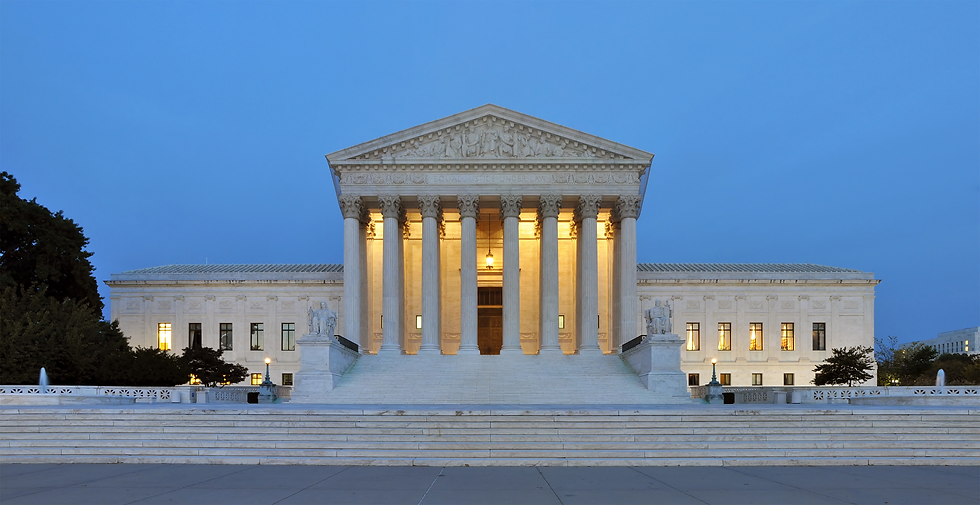
Amish parents Joseph Miller and Jonas Smucker, school representative Ezra Wengerd, and the three schools brought the lawsuit. They argue the law violates the Free Exercise Clause by eliminating a longstanding religious accommodation while retaining medical exemptions, and that it burdens their ability to educate children according to their faith—echoing the Supreme Court’s 1972 Wisconsin v. Yoder decision protecting Amish education practices.
The federal district court and the Second Circuit ruled for the state, finding the law neutral and generally applicable under Employment Division v. Smith. In December 2025, the Supreme Court vacated the Second Circuit judgment and remanded for reconsideration in light of Mahmoud v. Taylor (a 2025 parental-rights decision). On June 30, 2026, the Second Circuit again affirmed for New York, distinguishing Mahmoud on the ground that a vaccine requirement does not regulate curriculum or force affirmation of beliefs. The Amish re-petitioned the Supreme Court in late September 2026 (No. 26-438). As of early October, the Court had not yet decided whether to hear the case.
Options Available to the Amish Community (and Parallel Choices in California)
Leaving the state is not the only option, but it is the one families’ lawyers most consistently discuss if the courts uphold the mandate and enforcement continues. California families have already navigated comparable constraints since 2016.
Practical paths include:
Continue the legal challenge. This is the current course in New York. A Supreme Court victory could restore religious exemptions or force a narrower accommodation. A loss would leave the $118,000 fines in place and open the door to additional daily penalties. California has seen similar religious-freedom lawsuits with mixed results so far.
Comply with the vaccination requirement. This would allow community schools to continue operating (or classroom enrollment in California) but conflicts with the sincerely held religious beliefs described in court filings and community statements. Plaintiffs in the Amish case have indicated many families would accept other consequences rather than violate their faith.
Close community schools or shift to informal/home-based education. Compulsory education laws still apply in New York. While Yoder limited the state’s ability to require high-school attendance for Amish children, it does not eliminate schooling requirements altogether. In California, home-based private schools and certain independent-study programs without classroom instruction are explicitly exempt from the immunization mandate, giving objecting families a clearer statutory path than New York’s current interpretation provides for Amish community schools.
Pursue medical exemptions where clinically warranted. These remain available in both states but are narrow, individualized, and subject to physician certification (and, in California, additional state oversight). They do not provide a broad, community-wide religious accommodation.
Relocate to a state that still allows religious exemptions. About 45 states, plus the District of Columbia, still permit religious exemptions. Pennsylvania, which has the largest Amish population and allows religious exemptions, is frequently mentioned for New York families. Amish communities have a documented history of moving when local conditions no longer permit their way of life. California families have also cited relocation or full homeschooling as responses to SB 277. Lawyers for the New York Amish plaintiffs, including First Liberty Institute and Aaron Siri, have said that if New York prevails, many Amish families may have little practical choice but to leave to continue both their faith and their community schools without ruinous fines. No mass departure has been announced while the appeal is pending.
Other Relevant video links:
Fox News: “Lawyer warns NY vaccine mandate could banish Amish from state” (interview with First Liberty’s Hiram Sasser) — https://www.foxnews.com/video/6406056910112
The New York case tests the boundary between religious liberty and public-health authority for a community that has lived in the state since the 1830s. It also highlights a national pattern already experienced by California families who object to vaccine mandates on religious or other grounds: exclusion from traditional schooling without a narrow medical exemption, pressure to homeschool or relocate, and ongoing court challenges. The Supreme Court’s decision on whether to hear the Amish petition will determine whether New York’s approach continues to mirror California’s.
Sources include court filings in Miller v. McDonald, First Liberty Institute statements, California legislative records on SB 277 and subsequent bills, reporting from Reason, Just the News, The Epoch Times, Fox News, and Amish population data from the Young Center for Anabaptist and Pietist Studies.