
Local Volunteer Rescues Swimmer During Sunday’s IRONMAN 70.3 Event
- Elisa Ballard

- 9 hours ago
- 3 min read
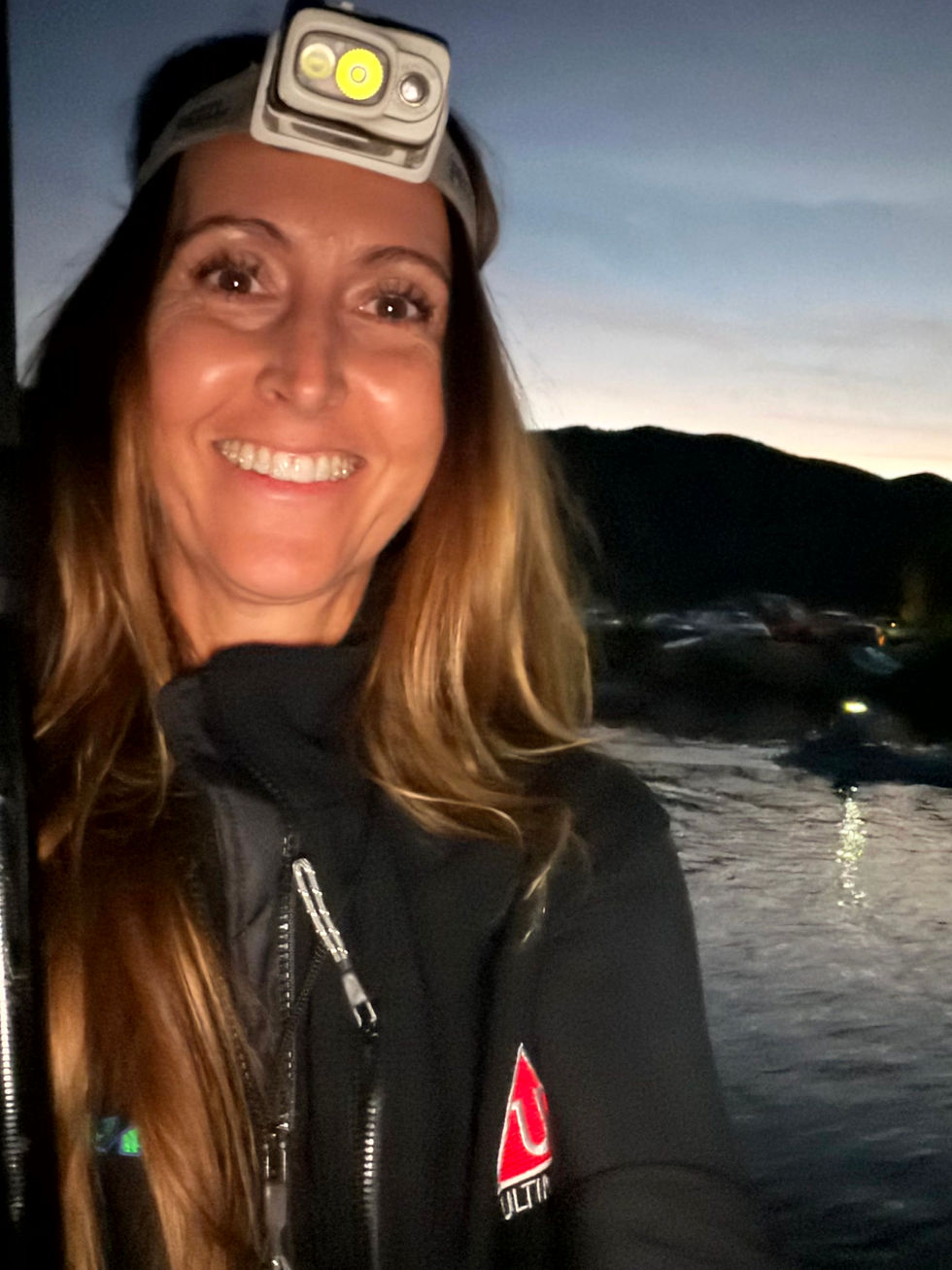
Chelsea Valach spoke with Shasta Unfiltered about the strong community support on display at the inaugural IRONMAN 70.3 Northern California triathlon, held Sunday, August 16, 2026. She was one of approximately 84 volunteers stationed on the water and on an island at Whiskeytown Lake as spotters for the swim leg, which began in the early morning hours. Valach and many fellow volunteers helped rescue swimmers in distress.
Volunteers signed up online. Those assigned to the swim portion were required to watch an Ironman training video covering possible scenarios and safe response procedures. One official, identified only as Eddie, oversaw the swimming leg from a Zodiac rescue boat and stayed in radio contact with medics via walkie-talkies.

Competitors entered the water in waves. Professional men started first at the official 6:15 a.m. start time, followed by professional women and then age-group athletes. Swimmers were released three at a time every five seconds. All wore tracking devices. With roughly 1,600 competitors, the lake quickly filled with activity and noise. Organizers noted that about 50 percent of entrants were first-time triathlon participants—double the typical 25 percent rate in similar events. Spotters had been warned about the high number of newcomers, and problems appeared almost immediately between the first and second buoys.
Valach and a friend were initially assigned to a peninsula because kayak volunteers already lined the course. Organizers believed additional water coverage was unnecessary. That assessment changed quickly. Kayakers became overwhelmed as distressed swimmers clung to their boats, many of them panicking. Some of the difficulty stemmed from wetsuit constriction; several athletes approached kayaks asking volunteers to unzip their suits. Valach and her friend along with an EMT who was nearby made the decision to leave the island to assist the swimmers.
Some competitors chose to wear wetsuits even though the water temperature measured a relatively warm 78.2 degrees. Medical experts note that tight-fitting wetsuits can contribute to a rare but serious condition known as swimming-induced pulmonary edema, or SIPE, in which fluid builds up in the lungs during or shortly after open-water swimming. Immersion itself shifts blood toward the chest, raising pressure in the lungs; a restrictive wetsuit adds external compression that can intensify this effect, even in warmer water, particularly when combined with high exertion.
The sheer number of athletes in the water made it difficult for spotters to identify those in trouble. Valach soon spotted a swimmer in distress and realized no kayak was available to help. Another competitor had already noticed the man and remained with him in the water. Valach texted Eddie on the Zodiac, but he was handling another rescue and could not respond.
She maneuvered her paddle board carefully threading her way across the crowded course, calling out “I’m crossing!” though she was unsure anyone could hear her over the splashing. As she drew closer, the second swimmer yelled “Help!” and waved. Valach answered, “I’m coming!” Upon reaching the struggling athlete, she had to pull him onto her board because he lacked the strength to climb on himself. He could not hold on, so she positioned herself carefully, gripping him with one hand while counterbalancing to keep from being pulled under. “I’m panicking, and I don’t know why. I have done this before,” he told her. Valach reassured him that he would be all right and used her free arm, still holding the paddle, to signal for help. The Zodiac eventually arrived and transported the swimmer to the paramedic station.
Swimmers were given a maximum of one hour and 10 minutes to complete the leg. When the cutoff arrived, two athletes remained in the water. Volunteers stayed at their posts until every competitor was accounted for. After an additional 20 minutes, the all-clear was given, and the volunteers were released.
Before paddle boards and kayaks were permitted on the water, owners had to certify that their craft were free of mussel contamination. Valach, who had previously helped rescue a swimmer at Whiskeytown Lake and, in the past, held an EMT certification, felt prepared for the role. She observed many athletes being pulled from the water and expressed gratitude for the community’s enthusiastic support of the competitors.
Thanks to volunteers like Chelsea Valach, every competitor returned home safely. Shasta Unfiltered appreciates Valach sharing her experience. Valach is a real estate agent with Upward Realty in Shasta County.


