
Has Private Equity Ruined Capitalism? The Real Threat Is Government Over-Regulation
- Rex Ballard

- 1 day ago
- 2 min read
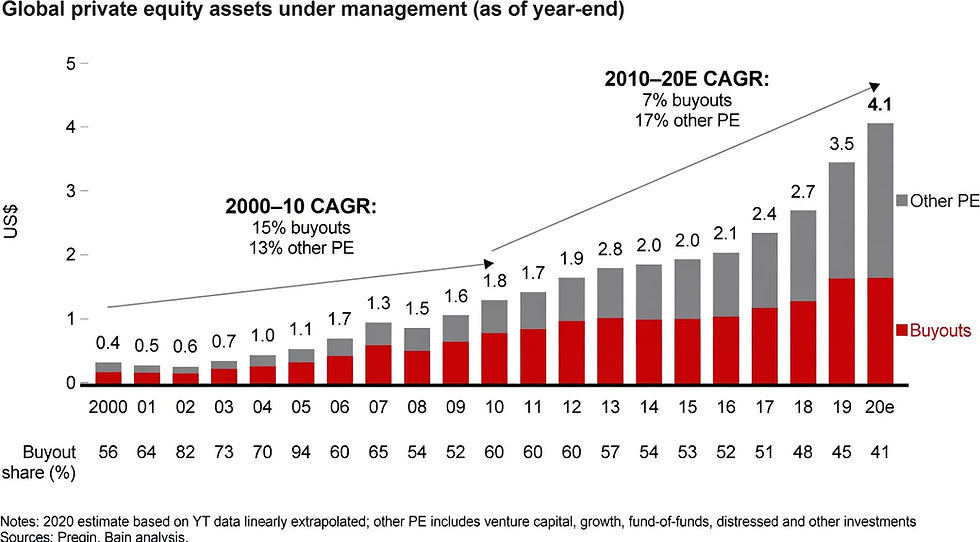
Private equity (PE) manages trillions and reshapes industries from retail to healthcare. Jeffrey A. Tucker’s recent Epoch Times piece, “Has Private Equity Ruined Capitalism?”, questions whether PE distorts true free enterprise.
In Shasta County, the effects are visible on Main Street and in local healthcare.
Tucker’s Arguments
Tucker highlights how heavy regulations—especially healthcare mandates and compliance costs—hit businesses hard once they grow past ~50 employees. This creates vulnerability that invites PE “rescues” via leveraged buyouts. These deals often load companies with debt for quick 5–7 year exits focused on cost-cutting, fees, and asset sales rather than long-term growth.
Other arguments raised by Tucker are, that PE ends up causing a shift to "short-termism". PE investors place extremely high pressure on maximizing short term results. Furthermore, PE ends up distorting capitalism's core elements:
Away from a Consumer focus
Away from true equity holders
PE turns companies into vehicles for leveraged bets rather than true self sustaining economic engines.
Tucker argues this is not organic capitalism but a distortion enabled by over-regulation and easy credit from loose monetary policy.
Local examples of casualties include national chains with PE-influenced histories:
Joann Fabrics on Dana Drive in Redding closed after 12 years as part of the company’s bankruptcy and massive store closures (hundreds nationwide, dozens in California).
Red Lobster on Dana Drive closed after more than 30 years, following national PE-driven strategies involving real estate sales and debt loading that contributed to bankruptcy.
Bed Bath & Beyond locations in the Redding area were affected by the chain’s debt struggles, activist investor pressures, and eventual 2023 liquidation.

Counterpoints, Data, and Local Healthcare Trends
PE can supply capital to struggling firms and has delivered strong returns for many public pensions (~12% annualized net).
However, 2025 data shows the downside: PE was involved in 54% of the largest U.S. corporate bankruptcies and 44% of major healthcare ones, linked to significant layoffs.
In Shasta County, smaller medical practices in the Redding area have increasingly consolidated under larger corporatized models. This mirrors national trends where financial pressures and regulatory burdens push independents toward bigger entities, often resulting in standardized care, higher administrative costs, and reduced local control.
Conclusion: The True Threat
The true threat to capitalism is government over-regulation. PE is largely a symptom—thriving in the regulatory thicket and easy-money environment created by big government. Reducing mandates, reforming taxes, and restoring sound money would curb the worst PE practices, empower local entrepreneurs, and restore genuine free-market capitalism that rewards long-term value creation over financial engineering.
Shasta County residents have seen the results in closed retail staples and shifting healthcare options. Real reform starts with addressing the policy distortions that make these outcomes more likely.
What are your experiences locally? Comment or submit tips to Shasta Unfiltered.
Sources: Epoch Times (Tucker), Private Equity Stakeholder Project, local reports (Redding.com, KRCR). Podcast review: YouTube - The Banker Next Door.


