
Why Is Shasta County Spending Millions to Lease Aging Buildings Instead of Using Its Own Historic Courthouse Which They Slated for Demolition?


Old Courthouses Still Serve Across California —While historic courthouses throughout California continue to serve the public effectively, Shasta County appears poised to demolish its own Old Courthouse — a decision that stands in contrast to practices elsewhere in the state and raises questions about fiscal responsibility amid rising lease costs for county offices.

Historic Courthouses Still in Active Use Statewide
California has multiple examples of older courthouses that remain fully operational after decades (or centuries) of service, often with renovations for seismic safety, accessibility, and modern needs:
Wakefield Taylor Courthouse, Martinez (Contra Costa County, 1933) — Still a key facility for the Superior Court.
Santa Barbara County Courthouse (1929) — Iconic Spanish Colonial Revival building, National Historic Landmark, and active Superior Court with public access.
Riverside Historic Courthouse (1903) — Beaux Arts style, restored and housing court functions.
Old Courthouse, San Jose (Santa Clara County) — Over a century old and still in use as part of the Superior Court system.
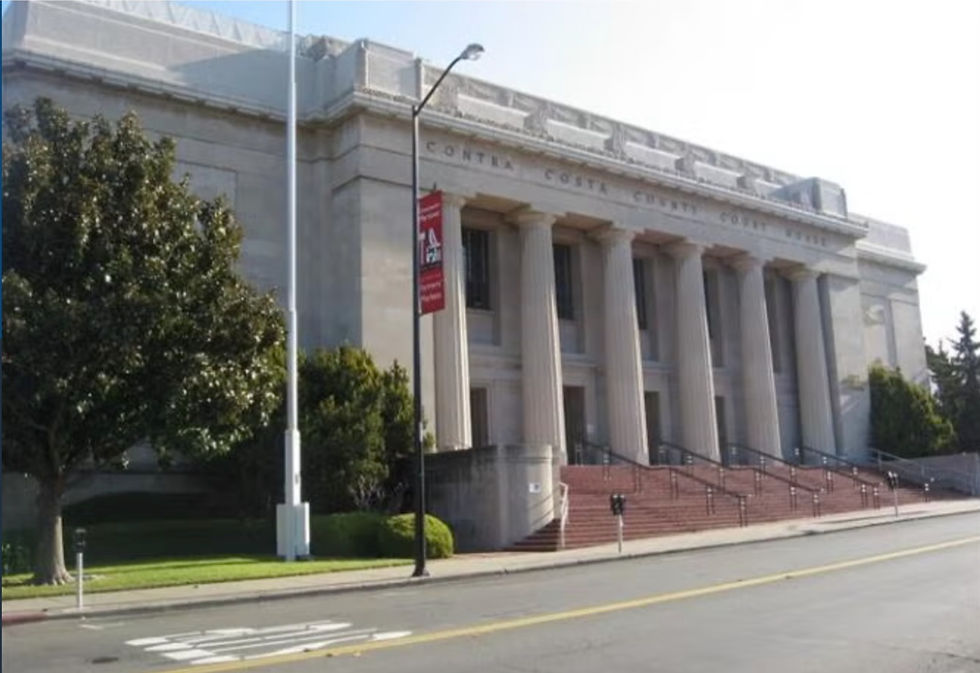
These buildings demonstrate that with proper maintenance and upgrades, older civic structures can continue serving justice system needs without full replacement.
Shasta County’s Expensive Lease Portfolio
Shasta County currently leases significant office space across Redding for various departments, with total square footage exceeding 178,000 SF and monthly rents approaching $190,590 at lease inception (annualized well over $2 million, before CPI escalations). Many of these leases are in buildings as old as — or older than — the county’s own historic courthouse (which most likely contains asbestos), and most include annual CPI increases of up to 3%, locking in escalating long-term costs for taxpayers.
Here is a summary of key leased properties from county records (build years noted where available; otherwise listed as unknown):
1643 Market St., Redding (Election) — 13,000 SF, built unknown (1966 reference in some notes).
1405, 1415, 1421, 1423 Court St. (Probation) — 6,460 SF, built unknown.
1647 Court St. (HHSA-Child Support Services) — 6,394 SF, built unknown (1974).
1313 Yuba St. (HHSA-Children’s Services) — 13,500 SF, built unknown.
2986 Bechelli Ln., Ste. 201 (Grand Jury) — built 1991.
1400 & 1550 California St. (HHSA) — 27,044 SF, built unknown (leasing since 1987).
1670 Market St. (HHSA) — 7,255 SF, built unknown (leasing since 2016).
1620,1624,1628 Market St. (HHSA-Admin.) — 7,345 SF, built unknown (leasing since 2015).
3985 Eastside Rd. (Public Administrator) — 2,000 SF, built 1978.
1810 Market St. (Probation-Juvenile) — 12,636 SF, built 1956.
2600 Park Marina Dr. (Child Support Services) — 41,973 SF, built 1964.
1220 Sacramento St. (Svcs) — 8,000 SF, built 1949.
And others with unknown build years or more recent construction.
Notable county purchases of older buildings include properties on West St. and Shasta St., both built in the 1960s (1967), acquired for expansion and other uses in 2021 and 2025.
These leases often run for multiple years, with renewal options and automatic or negotiated CPI escalators (typically 3%), meaning costs will continue to rise predictably. Taxpayers are effectively funding long-term commitments in privately owned buildings of similar vintage to the county-owned Old Courthouse. According to Cal/OSHA, any commercial building built before 1973 is highly likely to contain asbestos.
The Old Courthouse Alternative
The county’s Old Courthouse offers approximately 77,000 SF that could potentially be repurposed for office space or programs such as the Sheriff’s proposed Alternative Custody Program (ACP). Residents near the proposed Eastside Road site have filed suit to block that location, citing safety, environmental, and residential property value concerns over the male re-entry program and future jail expansion. Meanwhile, feasibility studies for the Old Courthouse (requested by Shasta Unfiltered via public records) have not yet been produced by the County.
Previous Shasta Unfiltered articles have detailed the history, condition, and potential of the Old Courthouse. Rather than continuing to pay millions annually under escalating lease terms, utilizing and renovating this existing county asset warrants serious consideration — especially as other California counties successfully maintain and operate their historic courthouses. We request a pause in the demolition of the Old Courthouse until an outside feasibility study can be conducted regarding repurposing the building. If any of the County Supervisors would like to forward information they have that contradicts the feasibility of using the building for other purposes, we invite them to email it to contact@shastaunfiltered.com.
The presence of asbestos or lead-based paint should not be the sole factor driving a decision to demolish the Old Courthouse.
Buildings constructed before 1980 commonly contain asbestos-containing materials, which generally pose no significant health risk if they are intact, undisturbed, and in good condition. Asbestos only becomes a concern when materials are damaged, fraying, or disturbed during renovation or demolition. Similarly, lead-based paint was banned for residential use in 1978 and was prevalent in structures built prior to that date. Established remediation methods — such as encapsulation, removal, or enclosure — effectively address these materials when necessary, often at a fraction of the cost of full demolition and replacement.
No publicly available reports indicate that the Old Courthouse fails to meet current earthquake safety standards. The building features robust steel-beam and concrete construction, typical of sturdy mid-20th-century civic architecture designed for longevity.
(Note: The attached Old Jail, constructed in 1939, may present more substantial structural or maintenance challenges according to some sources; however, this does not necessarily extend to the main courthouse or annex building itself.)
Shasta County residents deserve transparent answers on long-term facility planning, cost comparisons, and why taxpayer dollars are committed to leasing aging spaces when a substantial county-owned building stands ready. We will continue following records requests and board actions on this important issue.


