
Virginia Redistricting Referendum Passes Narrowly but Faces Immediate Court Block
- Rex Ballard

- Apr 23
- 3 min read
Republicans Counter with Bid to Return Arlington to D.C.
Virginia voters narrowly approved a Democratic-backed constitutional amendment on April 21 that would temporarily let the General Assembly redraw congressional districts outside the normal decennial process — a move widely viewed as an attempt to counter Republican gerrymandering efforts in other states ahead of the 2026 midterms. But within 24 hours, a Republican-favorable circuit court ruling halted certification of the results, setting up a fast-track showdown at the Virginia Supreme Court.
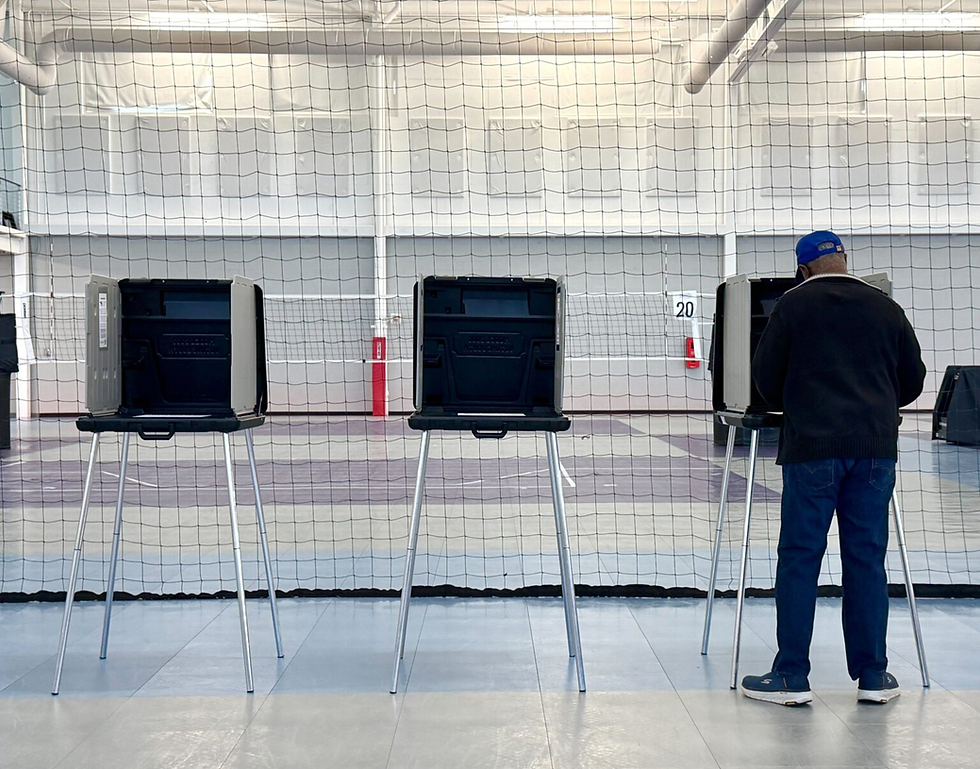
virginiamercury.com Virginia voters back redistricting amendment after months of legal and political battles • Virginia Mercury
The amendment, placed on the ballot via House Joint Resolution 4, would allow lawmakers to redraw maps between 2025 and 2030 if another state redraws districts for non-decennial or non-court-ordered reasons. Democrats framed it as restoring “fairness”; pre-election analyses suggested Democratic-favoring maps could shift Virginia’s current 6-5 Republican edge in U.S. House seats to as lopsided as 10-1 Democratic.
Current vs. Proposed Congressional Maps

Early returns showed the measure passing with roughly 51.45% “Yes” support. Yet on April 22, Tazewell County Circuit Court Judge Jack Hurley ruled the entire process unconstitutional. He declared the amendment “void ab initio,” deemed all votes cast “ineffective,” and issued a permanent injunction barring the State Board of Elections from certifying results.
Judge Blocks Certification

Democratic Attorney General Jay Jones immediately announced an appeal. Multiple related cases are now headed to the Virginia Supreme Court, which had twice allowed the vote to proceed while litigation continued.
Parallel Republican Counterstrike: “Make DC Square Again”
On the same day, Rep. Rich McCormick (R-Ga.) introduced the Make DC Square Again Act, which would reverse the 1846–1847 retrocession and restore the original boundaries of the District of Columbia (today’s Arlington County and City of Alexandria).
Arlington County — the land at the center of the fight


The move is explicitly framed as neutralizing the partisan impact of the redistricting amendment by removing roughly 250,000 heavily Democratic voters from Virginia.
Video Coverage for Full Context
Watch: Virginia voters approve redistricting overhaul (Fox News panel discussion) → View clip
Watch: Judge blocks Virginia redistricting referendum (Fox News breaking report) → View clip
Watch: LIVE Virginia redistricting referendum results → YouTube coverage
Watch: News wrap on the vote and national implications → PBS-style summary
Expert Analysis: Possible Outcomes and Timeline
Legal observers describe the Virginia Supreme Court fight as the decisive battle. Judge Hurley’s detailed findings on procedural violations give Republicans a strong case. Most analysts give the amendment a 40-45% chance of ultimate survival, with a 55-65% likelihood it will be struck down on process grounds.
Most probable timeline:
April 27, 2026: Oral arguments expected before the Virginia Supreme Court.
Late May to mid-June 2026: Final ruling likely.
If struck down: The 2021 court-approved maps (and independent commission process) remain in force for the 2026 elections. If upheld, The General Assembly could move quickly to enact new maps.
The “Make DC Square Again” legislation faces steeper odds and is unlikely to affect 2026 timelines. This episode underscores the escalating national redistricting arms race for the 2026 midterms. The Virginia Supreme Court’s forthcoming decision will likely determine whether the status quo holds or one party gains a decisive map advantage. Developments are moving at breakneck speed.


