
Supreme Court Delivers Decisive Victory for Immigration Enforcement: Ends Judicial Blocks on TPS Termination for Haitians and Syrians


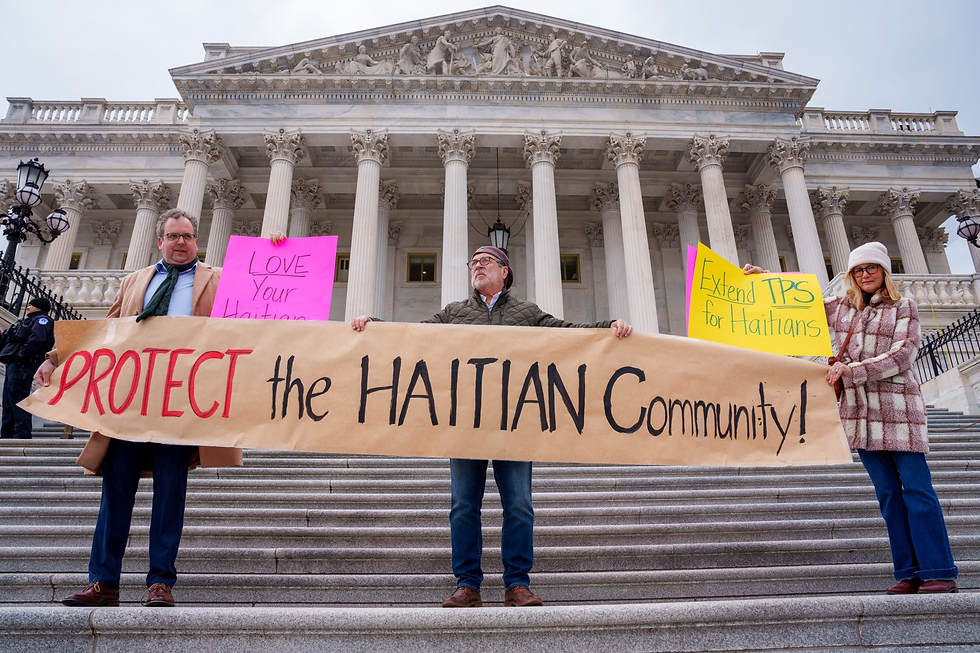
In a 6-3 ruling handed down today, the U.S. Supreme Court cleared the way for the Trump administration to terminate Temporary Protected Status (TPS) for hundreds of thousands of Haitian and Syrian nationals. The decision strikes down lower court injunctions that had blocked the Department of Homeland Security from acting, affirming that federal courts generally lack authority to second-guess the Secretary’s determinations under the TPS statute.
The ruling represents a major win for executive authority and the plain text of federal immigration law — and a rebuke to what many have described as overreach by activist lower courts.

Background: TPS and the Push for Termination
TPS was created by Congress in 1990 as a temporary humanitarian program. It allows nationals of designated countries facing armed conflict, natural disasters, or other extraordinary conditions to remain in the U.S. and work legally — but only while those conditions persist. Designations are supposed to be reviewed every 18 months.
The Trump administration, through then-Secretary Kristi Noem, determined that conditions in Haiti and Syria no longer justified continued TPS designations (or that extending them was contrary to the national interest). Termination notices were issued in 2025. Lower federal courts in Washington, D.C., and New York — along with appeals courts — stepped in with broad injunctions, halting the terminations and effectively turning a temporary program into something closer to permanent status for many.
Shasta Unfiltered previously covered the administration’s termination efforts and the resulting legal battles. Today’s Supreme Court decision resolves the core dispute in favor of enforcement.
The Supreme Court’s Ruling
Writing for the majority, Justice Samuel Alito held that the TPS statute contains a clear and broad bar on judicial review: “There is no judicial review of any determination of the [Secretary of Homeland Security] with respect to the designation, or termination or extension of a designation, of a foreign state.”
The Court rejected arguments that courts could still review procedural steps (such as agency consultation) or the overall process leading to termination. It also found that the equal-protection challenge to the Haiti termination (alleging racial motivation) was unlikely to succeed on the merits.
The 6-3 decision along ideological lines lifts the lower court blocks. The administration can now proceed with ending TPS protections for:
Approximately 330,000–350,000 Haitian nationals
Roughly 3,800–6,100 Syrian nationals
Many of these individuals have lived in the U.S. for years. Once protections end, they will lose work authorization and become subject to removal proceedings (though individual cases may still seek other forms of relief).
Somalia Likely Next
The same legal principle applies to other TPS terminations the administration has pursued. Somalia’s TPS designation (affecting roughly 700 people) was terminated effective March 2026, but lower courts had paused implementation. With today’s precedent establishing that courts generally cannot review these determinations, Somali nationals are widely expected to be next as the administration moves to lift those stays.
This pattern — broad lower-court intervention followed by Supreme Court correction — has repeated across multiple immigration enforcement actions.
What the Ruling Means
The decision reinforces that TPS is temporary by design and that the elected executive branch, not federal judges, holds primary authority over when designations end. It limits the ability of district courts to issue nationwide or sweeping injunctions that effectively rewrite immigration policy.
Critics argue the ruling removes important checks and could expose people to unsafe conditions abroad. Supporters — including many in communities like Shasta County that have long supported secure borders and rule-of-law enforcement — see it as restoring balance after years of judicial activism that frustrated the will of the voters and the statute's plain language.
For American workers in construction, agriculture, hospitality, and other sectors across Northern California and the nation, consistent enforcement of immigration law helps protect wages and job opportunities.
Watch the Breaking Coverage
Local Perspective from Shasta County
Here in Shasta County and across rural America, residents have repeatedly expressed frustration with federal policies that appear to prioritize non-citizens over citizens and legal residents. Today’s ruling is a clear signal that the highest court recognizes the executive’s role in setting and enforcing immigration priorities.
It also underscores the importance of electing presidents and appointing judges who respect statutory limits rather than expanding judicial power into policy-making.
Shasta Unfiltered will continue tracking implementation, any transition periods announced by DHS, and downstream effects on local communities and the broader national debate.
Readers are encouraged to view primary sources, including the Supreme Court opinion at supremecourt.gov.
Sources: U.S. Supreme Court opinion in Mullin v. Doe (June 25, 2026); SCOTUSblog analysis; DHS and USCIS records; contemporaneous reporting from multiple outlets.
Fair Use Notice: Images in this article are used under fair use provisions for purposes of news reporting, commentary, and criticism. All rights remain with original copyright holders.


