
Supreme Court Clears Path for Trump Mail Ballot Order — But Key Barriers Remain Before November


In a significant development for election integrity efforts, the U.S. Supreme Court on Monday lifted a major lower-court block on President Donald Trump’s executive order aimed at strengthening safeguards around mail-in ballots. The 6-3 decision represents a clear positive step forward for the administration’s push to ensure only eligible citizens receive and cast federal ballots ahead of the November midterms.

The unsigned opinion stayed an injunction issued by a Massachusetts federal judge that had prevented the Trump administration from implementing key portions of Executive Order 14399 against 23 states and the District of Columbia. Those jurisdictions, largely led by Democratic officials, had sued to halt the order shortly after it was signed in March.
The executive order directs the Department of Homeland Security to compile state-by-state lists of adult U.S. citizens, instructs the Justice Department to prioritize investigations and prosecutions of election officials who issue ballots to ineligible voters, and requires the U.S. Postal Service to pursue rules ensuring mail ballots are handled with greater verification and tracking.
By clearing the way for the administration to proceed with the citizenship lists and related enforcement priorities, the Court rejected claims that the challenge was ripe for review at this stage. The majority described the order as primarily an internal directive to executive branch agencies and found that the states had not yet demonstrated the concrete injury needed to maintain the broad injunction. The ruling explicitly does not decide the ultimate legality of the order or any specific implementing measures, noting that “time will tell” on those questions.
This is a meaningful win for the Trump administration. It allows critical preparatory work to move forward rather than remaining frozen by preliminary court action. For advocates of tighter election security—particularly those concerned about noncitizen voting and the integrity of mail balloting systems—the decision removes one substantial obstacle that had slowed implementation.
Hurdles Still Stand
Full implementation before the November 3 election is far from assured. A separate nationwide injunction, also issued by the same Massachusetts judge (Indira Talwani - appointed by Obama) on August 11, 2026, continues to block the Postal Service from putting its related rules into effect for elections this year. That order remains untouched by Monday’s Supreme Court action.

This nationwide injunction warrants particular scrutiny in light of the Supreme Court’s 2025 decision in Trump v. CASA, Inc., which limited the authority of federal district courts to issue universal injunctions that extend beyond the parties before them. The CASA ruling held that equitable relief should generally be tailored to provide complete relief only to the actual plaintiffs, not to freeze federal policy for the entire nation. The August 11 order—blocking Postal Service implementation across all states rather than solely for the organizational plaintiffs—appears to conflict with that principle and may itself face challenges as overly broad under current precedent. It should be noted that many of Judge Talwani's prior injumctions against the Trump administration have been stayed or overturned by either the appellate or Supreme court.
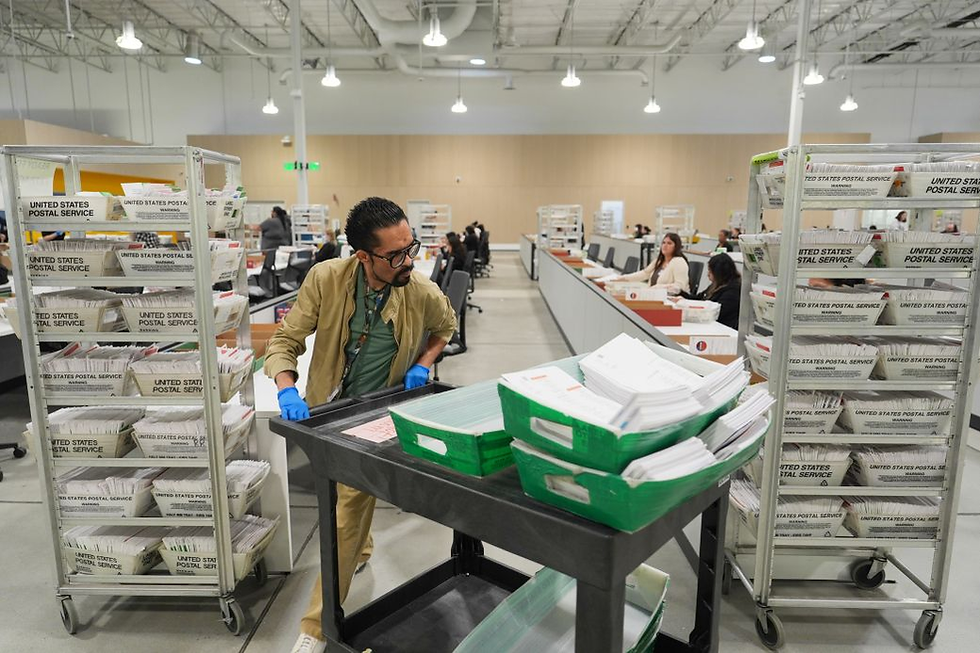
The Postal Service had finalized a rule intended to establish envelope standards, barcodes, and verification procedures tied to the executive order. That rule cannot take effect for the midterms while the nationwide injunction stands. The administration will need to overcome this remaining judicial barrier—through further appeals, efforts to narrow the order under CASA, or additional emergency relief—before the core mail-delivery restrictions can be enforced.
Time is short. Early voting and the distribution of mail ballots will begin in many states within weeks. Even if the remaining injunction is lifted or narrowed, logistical challenges of implementing new nationwide procedures so close to Election Day could limit practical impact this cycle.
California was among the states that challenged the order, so the ruling has direct relevance for Shasta County voters and election officials. Local administrators will continue operating under existing state rules for now, but the federal lists and any future Postal Service requirements could eventually intersect with California’s mail-ballot system if the remaining legal obstacles are cleared.
Monday’s decision is a constructive advance for the administration’s election-security agenda. It restores the ability of federal agencies to prepare and move forward on citizenship verification and enforcement priorities. Yet the path to full implementation before November still runs through the courts. The nationwide Postal Service injunction must be addressed, and any concrete steps the administration takes will almost certainly face fresh legal challenges. Whether those remaining hurdles can be satisfied in time remains an open and urgent question.


