
Judge Denies Emergency Hold on Shasta’s 2024 Ballots

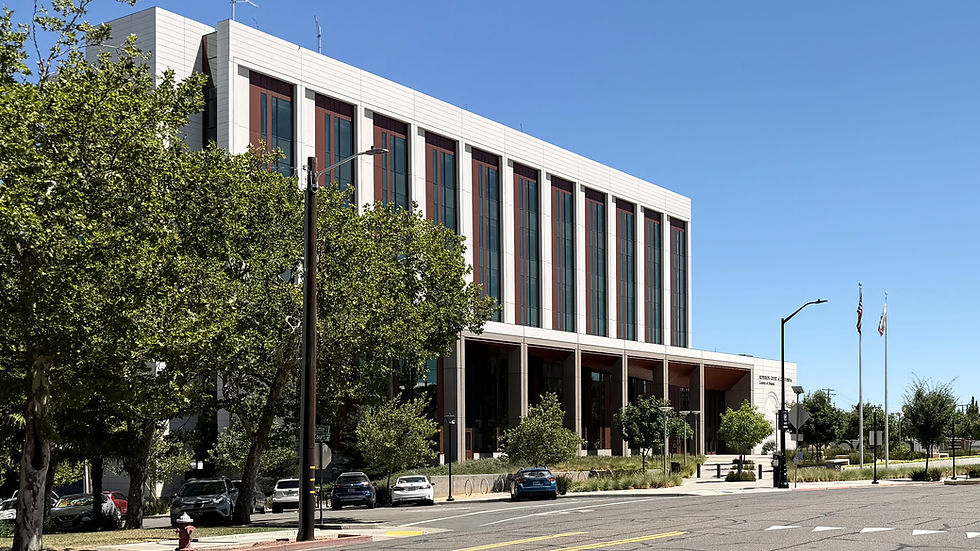
REDDING — On Thursday morning, Sept. 17, Judge Benjamin L. Hanna denied Arne E. List’s request for a temporary restraining order that would have blocked Shasta County from destroying November 5, 2024 federal-election materials still in official custody.
The ruling does not mean the ballots no longer matter. Hanna said the emergency ask was too extraordinary: telling the County not to follow California Elections Code section 17301 after the 22-month retention period. The underlying writ remains pending. The denial was without prejudice, meaning the case can still move forward.
Once those sealed packages are shredded, they cannot be put back together.
A narrow ask
List, appearing in propria persona, did not ask to open ballots, recount votes, or inspect machines. He asked that whatever 2024 physical and electronic records still exist remain sealed, unopened, and locked with the Registrar until the court decides whether destruction is lawful.
The clock was the point. Elections staff had scheduled a “confidential shred” for the morning of Sept. 11, subject to a court order.
County Counsel Joseph Larmour and Assistant County Counsel Trisha Weber told Hanna the County still opposes the request. The Board of Supervisors took a 5:0 vote on the opposition on Tuesday. Judge Bradley Bachman had heard an interim appearance earlier in the week.
What the court would hear — and what it would not
Hanna confined List to section 17301(b), the list of packages that must be kept unopened for 22 months, not the validity of any election.
List argued public-interest standing under Save the Plastic Bag Coalition v. City of Manhattan Beach and cited Victor Valley Union High School District v. Superior Court for the duty to preserve evidence once litigation is foreseeable. He said ballots, logs, images, and backups are not all the same category of record, and that community division is a reason to pause, not a reason to shred. Authenticating what remains, he said, would unify the county more than destroying it.
Larmour said List is not bringing an election contest, so the statutory exception in section 17301(c) does not apply. If the federal government wanted to hold the 2024 papers, he said, it could proceed under that statute. Hanna restated the County’s case as lack of standing.
List mentioned a Sept. 10 Justice Department letter telling states to preserve 2024 records. Larmour objected. Hanna agreed it had no bearing in superior court. List pointed to Hanna’s Aug. 7 Measure B ruling as a model of reading statutes category by category. Larmour warned of federal penalties — a $1,000 fine and up to a year in jail under 52 U.S.C. §§ 20701 and 20702 — for mishandling required election records.
Hanna ruled from the bench. The County cannot keep a hundred years of elections, he said; it would run out of space. There is a clear requirement. The TRO was denied.
Why the paper still matters
Section 17301(c) conditions destruction on the absence of a timely contest or specified criminal prosecution. Elections Code section 15551 says that once such a proceeding has begun, the packages “shall not be destroyed until final determination.” The Secretary of State’s own guidance tells counties to consult counsel because “other actual election-related litigation” may affect retention.
List attached a federal grand-jury subpoena for June 2, 2026 primary records — not the 2024 ballots — only to show federal process is already in motion. He also attached a Sept. 10 preservation demand from the Lex Rex Institute on behalf of a Redding resident asking the County to hold 2024 ballots plus system data, images, logs, and backups. The resident has reported to the District Attorney what she says she observed during the Dec. 3, 2024 canvass, including ballot-log entries that did not match the tabulator screen. Those claims have not been investigated and cannot be tested if the logs and packages are gone.
Curtis has himself called for federal review of the 2024 materials. In December 2024, the Board of Supervisors asked the Justice Department to look at the “overspray” duplication issue. That is not a finding of fraud. It is a finding that these records are highly significant in determining the truth about the November 2024 election.
“I didn’t hear no bell”
Outside court, List did not claim victory.
“The judge didn’t go the way I was hoping,” he said. “I wasn’t necessarily surprised, so I wasn’t really all that disappointed. Like Rocky says, I didn’t hear no bell. This isn’t over.”
He said he would get the hearing minutes, reflect, and keep going. Shasta County, he told supporters, is “a microcosm of the macrocosm that’s happening across the country.” He thanked people who showed up, asked them to pray, and said truth and justice are impossible without transparency — “without knowing what all the facts are.”
He said the case is not about him. He trains children with special needs and left that work on short notice to be in Redding. He thanked supporters who printed documents and helped him request the court recording.
“I didn’t hear any bell today, and I’m gonna keep going until the bell rings.”
County counsel has since asked Curtis to arrange destruction, with a date discussed as early as Sept. 30. Curtis has also said 2024 and 2026 materials have remained locked together while federal process around the June primary continues.
Curtis later put the statute in plain language. He said that election laws are not written to make elections secure; that they are written to make elections final. That it's not about accuracy.
That is the law Hanna applied. It is also the wound this county has been living with. Finality without a chance to authenticate the record does not restore trust. It buries the questions.
Hanna is right that Shasta cannot warehouse a century of elections. No one asked for that. The ask was temporary and sealed: leave what is still in the room until the pending writ and related notices are sorted. Citizens Oversight, Inc. v. Vu already showed what happens after federal-election ballots are destroyed. The case becomes moot because the paper is gone.
Accountability does not require believing every allegation. It requires leaving enough of the original record to test the allegations. The bell has not rung. The boxes are still there. For a little while.


