Amazon Lays-off 30,000 Employees


The Reality Behind the Cuts
In late 2025 and early 2026, Amazon executed one of the largest corporate layoffs in its history, eliminating approximately 30,000 roles across its global operations. This included an initial reduction of 14,000 jobs in October 2025, followed by another 16,000 announced on January 28, 2026. These cuts primarily targeted corporate functions, sparing frontline warehouse and fulfillment workers, and represented about 10% of Amazon's 350,000-strong corporate workforce. The moves came amid a broader wave of tech industry downsizing, with over 98,000 jobs lost across the sector in 2025 alone, according to trackers like Layoffs.fyi.
Affected employees received severance packages, including lump-sum payments based on tenure, continued health insurance for a limited period, and outplacement services. However, the scale of the layoffs sparked criticism, with some viewing it as a stark contrast to Amazon's record profits—net income reached $21.2 billion in Q3 2025 alone, up 38% year-over-year. As of January 31, 2026, no further layoffs have been announced, but the company has indicated potential for additional adjustments if needed to reduce bureaucracy.
Streamlining for a Startup Culture: Addressing Overhiring
Amazon's leadership, led by CEO Andy Jassy, framed the layoffs as essential for streamlining operations and recapturing the company's "startup culture." Internal memos emphasized reducing bureaucratic layers, with 78% of cuts in retail targeting mid-level managers, and mandating a full five-day return to office to foster collaboration. Jassy highlighted how pandemic-era overhiring had bloated the workforce: Amazon's corporate headcount tripled from 117,000 in 2017 to 350,000 by 2022, leading to excessive management layers and slower decision-making.
This narrative resonates with evidence of overhiring. During the COVID-19 boom, Amazon rapidly expanded to meet surging e-commerce demand, but as growth normalized, redundancies emerged. Initiatives like a "no bureaucracy" email alias, which garnered 1,500 submissions and led to 450 operational changes, underscore genuine efforts to debloat. Yet, critics argue this cultural reset masks deeper financial motivations, especially as the company simultaneously invested in frontline worker pay—raising average hourly compensation to over $30 including benefits for fulfillment staff.
The financial upside of these cuts is substantial. With the average total cost per corporate employee around $216,000—including salary, benefits, stock compensation, and taxes—the layoffs could yield annual savings of approximately $6.5 billion. This figure aligns with median total compensation data from platforms like Levels.fyi, reflecting the high-paying nature of Amazon's tech and managerial roles.
Financial Analysis: Record Revenues Mask Cash Flow Challenges
Amazon's Q3 2025 financials paint a picture of robust growth tempered by strategic reinvestments. Revenue hit a record $180.2 billion, up 13% year-over-year, driven by North American retail (up 11% to $106.3 billion), international segments (up 12%), and AWS cloud services (up 20% to $33.0 billion). Net income surged 38% to $21.2 billion, with margins expanding to 11.8%, bolstered by high-margin areas like advertising (up 24% to $17.7 billion) and AWS (operating margins at 34.6%).
However, free cash flow (FCF) tells a different story, plummeting 69% year-over-year to $14.8 billion on a trailing 12-month basis, with quarterly FCF turning negative at -$4.8 billion. This precipitous drop stems from aggressive capital expenditures (capex), which ballooned to $125 billion for 2025—up 61% from the prior year. Operating cash flow remained strong at $130.7 billion (up 16%), indicating the core business is healthy, but the FCF decline highlights a deliberate shift: Amazon is channeling profits into future growth rather than immediate liquidity. As of January 31, 2026, Q4 2025 results (ending December 31, 2025) have not yet been released; they are scheduled for February 5, 2026. Analyst consensus anticipates Q4 revenue of $211.3 billion (up ~13% YoY), AWS at $34.9 billion, and EPS around $1.97, with full-year 2025 revenue at $714.7 billion and EPS at $7.18 (up 29.8% YoY).
AI Infrastructure Investments: The Driver Behind the Numbers
The bulk of this capex—around 75%—is directed toward AI infrastructure, including data centers, GPUs, custom Trainium chips, and power systems. Amazon added 3.8 GW of data center capacity in 2025, equivalent to powering 3 million homes, and raised $27 billion in debt to fund the expansion. This aligns with a broader industry trend where hyperscalers like Amazon, Microsoft, and Google are projected to spend $1.15 trillion on AI from 2025-2027. Recent developments include a potential $50 billion investment in OpenAI, which could involve compute commitments and model integration, and up to $50 billion committed in November 2025 for AI and supercomputing infrastructure tailored for U.S. government agencies.
Jassy has downplayed direct AI-driven job losses, but internal memos suggest automation will handle routine tasks, potentially displacing the 30,000 laid-off workers and more over time. Tools like Amazon Q for text analysis, AgentCore for monitoring, and AI in coding and customer service are already reducing human needs in areas like retail operations and cloud management. As AI matures, this "humans vs. compute" trade-off—converting payroll savings into silicon—could fundamentally reshape Amazon's workforce, with AI agents managing complex tasks autonomously. By 2027, Amazon plans to avoid hiring for 160,000 roles in the U.S. due to AI efficiencies.
The Wild Card: Autonomous Robots and Self-Driving Vehicles
Looking ahead, a major wildcard reshaping Amazon's workforce needs is the rise of autonomous robots, self-driving delivery vans, and shipping trucks. These technologies promise to automate last-mile logistics, warehouse operations, and long-haul transport, potentially displacing human roles in fulfillment and delivery while creating new opportunities in maintenance, oversight, and system design. What may seem far-fetched is already unfolding rapidly, with pilots, acquisitions, and market projections indicating widespread adoption by 2027.
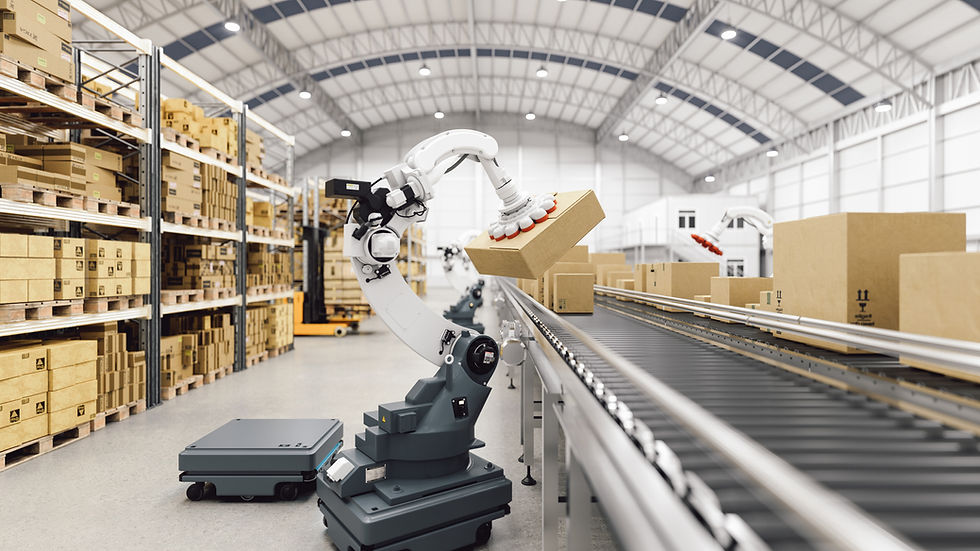
Amazon is at the forefront, integrating robotics like the six-armed Blue Jay system for picking and stowing tasks, and acquiring Rightbot in January 2026 to enhance truck unloading automation. In warehouses, humanoid robots such as Agility Robotics' Digit are being trialed for package handling, with real-world tests potentially starting as early as 2025. For delivery, Amazon's Scout sidewalk robots and Prime Air drones have completed over 1,000 deliveries in 2024 across four states, with projections for 20% cost savings on last-mile logistics by 2026. Prime Air is expanding to over 50 cities by 2026, aiming for 500 million annual drone deliveries by 2030, with operations now in Texas, Arizona, and Michigan, delivering packages under five pounds in under 60 minutes.
On the roads, Amazon's Zoox robotaxi—acquired in 2020—is scaling public rides in Las Vegas and San Francisco, with paid services launching in early 2026 and expansion to more cities planned. Partnerships with Aumovio and Aurora Innovation are accelerating self-driving trucks, with commercial deployments targeted for 2027, potentially revolutionizing freight amid a $1.63 billion autonomous delivery market in 2026 (up 23.8% from 2025).
Challenges remain, such as urban navigation issues seen in incidents like a delivery robot struck by a train, but advancements in AI-driven avoidance and regulations are paving the way. Speculative forecasts suggest up to 30% of Amazon's workforce could be impacted by 2026, though this underscores the near-term shift rather than immediate replacement.
Conclusion: The Enduring Role of People in Tech Growth
In the end, while Amazon's layoffs and AI pivot signal a shift toward efficiency and automation, corporations like Amazon, Microsoft, and Google ultimately rely on people to execute on growth. Jobs will likely continue to expand within these tech giants—analysts project sustained hiring in AI engineering, data science, and emerging roles amid projected revenue growth (e.g., AWS backlog at $200 billion). However, the nature of those jobs remains unclear: Routine tasks may vanish, replaced by demands for skills in AI oversight, ethics, and innovation. As these companies navigate the AI and automation era, the key will be balancing technological advancement with human capital investment to sustain long-term dominance.
Sources:
Amazon Layoffs (2025-2026)
Update on our organization - Amazon News - Official Amazon announcement on the January 2026 layoffs.
Amazon confirms 16,000 more corporate job cuts, bringing total to 30,000 since October - GeekWire - Details on the scale and context of the reductions.
Exclusive: Amazon plans thousands more corporate job cuts next week, sources say - Reuters - Reporting on the planned second round of cuts.
Q3 2025 Financial Results
Amazon.com Announces Third Quarter Results - Amazon Investor Relations - Official earnings release with revenue, net income, and segment breakdowns.
Amazon raises spending forecast to $125 billion as third-quarter results top estimates - CNBC - Analysis of earnings, including FCF drop and capex increase.
Amazon Q3 FY 2025 Earnings: AWS Reaccelerates, Retail and Ads Grow - Futurum Group - Breakdown of YoY growth and margins.
AI Infrastructure Investments and Capex
Amazon accelerates AI and data center spending with multibillion-dollar commitments - Digital Commerce 360 - Coverage of $50B+ commitments for AI and data centers.
Amazon to spend up to $50 billion on AI services for U.S. government - CNBC - Details on government-focused AI investments.
Why Amazon's $125 Billion AI Bet Is Different From Meta's - Investing.com - Comparison of capex strategies and projections for 2026.
Autonomous Robots and Self-Driving Delivery
Amazon's newest AI and robotics systems are empowering employees and speeding up delivery - Amazon News - Overview of new systems like Blue Jay and agentic AI tools.
Amazon, Aumovio Team Up to Boost Autonomous Truck Deployment - Transport Topics - Partnership for self-driving trucks, announced at CES 2026.
Your future delivery order in SF might be dropped off by a little self-driving robot - Yahoo Tech - Discussion of sidewalk robots and suburban expansion.