
City of Weed - Lumber Mill Closes

Updated: Dec 23, 2025
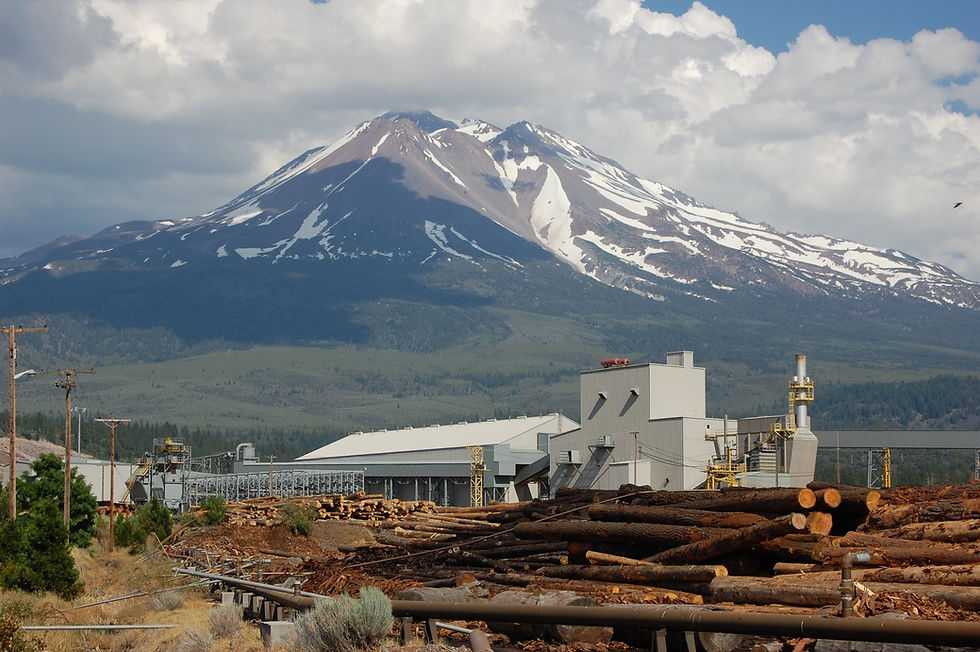
A Deeper Look at Weed's Mill Closure
While headlines about the December 3, 2025, closure of Roseburg Forest Products' veneer plant in Weed, California, focus on the sudden loss of 140 jobs and the town's economic gut-punch, a less-told story lurks beneath the surface. A story woven from flames, racial history, and lingering legal battles. This isn't just about market consolidation or shifting production to Oregon; it's the culmination of a troubled relationship between a corporate giant and a resilient community, marked by environmental hazards, systemic inequities, and a devastating 2022 wildfire that may have sealed the mill's fate.
At the heart of this narrative is Lincoln Heights, Weed's historic Black neighborhood, born from the mill's own ambitions. In the 1920s, Long-Bell Lumber (a predecessor to Roseburg) recruited thousands of Black workers from the South with promises of double wages and train fares, creating an unexpected enclave in this predominantly white timber town. At that time, segregation defined life: Black families lived in "the Quarters"—smaller homes without plumbing, separated by railroad tracks from white areas. Yet, it fostered a tight-knit community, with churches, taverns like the Harlem Club, and intergenerational bonds that endured even as the Black population dwindled from 14% to 6% over decades. The mill provided jobs, but at a cost: Proximity exposed residents to pollution, truck traffic, and hazards, amplifying systemic racism through underinvestment in services like fire hydrants and fuel reduction.

Fast-forward to September 2, 2022, when the Mill Fire erupted from Shed 17 on Roseburg's property—a wooden structure storing hot ash from the mill's cogeneration plant. Winds gusting up to 30 mph carried embers into Lincoln Heights, incinerating about 60 tightly packed wooden homes—many built from mill scraps—and claiming two lives. The blaze scorched 4,000 acres, displacing families like DeAndre Thomas, who fled with his daughter amid choking smoke, and Robert Broomfield, who lost his mother's, sister's, and aunt's homes along with a cherished '57 Chevy. CAL Fire later pinned the cause on mill operations, citing negligence in storing flammable materials in an aging, wind-vulnerable building.
This wasn't isolated; it echoed decades of environmental conflicts. The mill site includes a Superfund cleanup from the 1980s, where toxic chemicals like arsenic and dioxins contaminated soil and water, forcing the closure of a nearby park. Roseburg's 2006 cogeneration plant, meant for sustainability, drew opposition over air pollution and health risks, prompting the company to threaten mill shutdowns—a tactic repeated in water rights disputes from 2016-2021, where Roseburg sued residents in what is commonly called a SLAPP suit (strategic lawsuit against public participation) that was quickly dismissed, over access to Beaughan Springs. Climate change amplified these risks, turning dry forests into tinderboxes and exposing Lincoln Heights' vulnerabilities—redlining-like effects that left the Black community disproportionately harmed.
The fire's aftermath? Lawsuits piled up. Victims, represented by firms like Singleton Schreiber and Danko Meredith, sued Roseburg for negligence, seeking compensation beyond the company's $50 million restoration fund. In June 2023, Baron & Budd secured a $7.25 million settlement for the City of Weed, but individual claims lingered. By June 2025, Roseburg countersued its insurer, Liberty, over coverage disputes, signaling mounting financial strain. While Roseburg's official line on the 2025 closure emphasizes "modernization" and competitiveness, the timing—amid unresolved legal battles and reputational damage—suggests deeper pressures. Could the fire's costs, combined with a history of threats and community friction, have tipped the scales?

For Lincoln Heights survivors, the closure stirs mixed emotions: Relief from ongoing hazards, but grief over lost livelihoods in a neighborhood already scarred. Fears of gentrification loom, as post-fire rebuilding codes demand larger lots, potentially pricing out longtime residents. Civil rights attorney Ben Crump's involvement post-fire highlighted "equal justice" demands, framing the disaster as environmental racism. In this light, the shutdown isn't merely economic—it's the end of a complex legacy that built a Black community while sowing seeds of its peril.
As Weed pivots toward tourism and reinvention, this angle reveals a story of resilience amid adversity, urging a reckoning with corporate accountability and climate justice. It's a reminder that behind every mill closure lie layers of human history, often overlooked in the rush to tally job losses.


